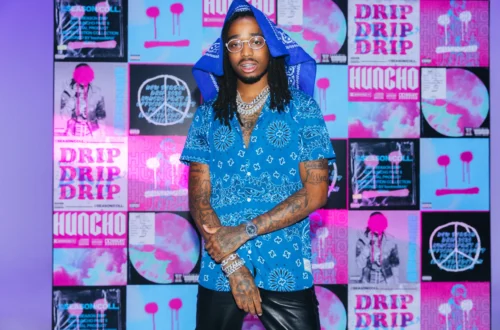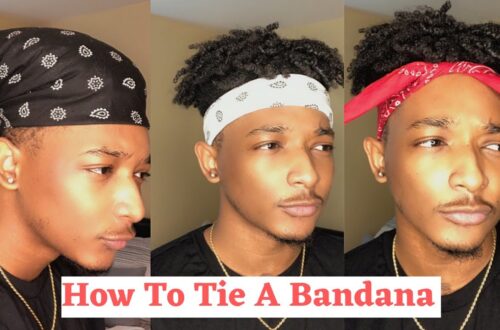
Different ways to wear a bandana have evolved dramatically from simple head coverings to versatile fashion statements dominating 2026 runways and street style alike.
This timeless accessory—once associated primarily with cowboys and farmers—now appears in collections from Gucci, Chanel, and Fendi, proving its universal appeal across all fashion aesthetics.
Whether you’re looking to elevate casual outfits, experiment with hair accessories, or add personality to formal looks, bandanas offer unlimited styling possibilities.
From classic triangle folds to creative braiding techniques, mastering these methods transforms a simple square of fabric into your most versatile wardrobe essential.
Table of Contents
The Bandana Revival: Why Everyone’s Wearing Them in 2026
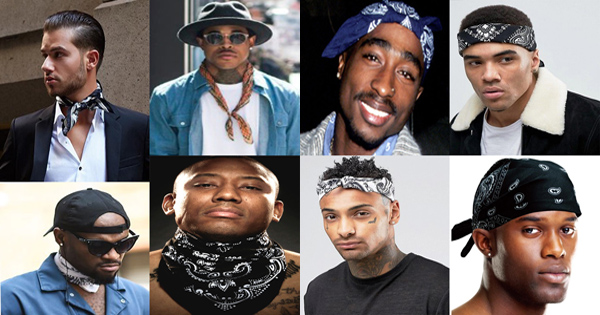
Fashion Week Influence and Celebrity Endorsements
Bandanas dominated Fashion Week presentations throughout 2025 and into 2026. Major designers like Miu Miu, Etro, and Chanel’s Cruise Collection showcased oversized silk bandanas styled in innovative ways.
Celebrities from Timothée Chalamet to Rosalía and Sabrina Carpenter have been spotted wearing bandanas as headscarves, braided into hair, and draped over shoulders. This celebrity endorsement has propelled bandana searches up 250% year-over-year according to Google Trends.
Sustainability Meets Style
The bandana trend aligns perfectly with sustainable fashion values. These reusable accessories reduce reliance on disposable fashion items while offering endless outfit combinations from a single piece.
Eco-conscious brands now produce bandanas from organic cotton, hemp blends, and upcycled vintage fabrics. This makes them both stylish and planet-friendly—a combination Gen Z particularly appreciates.
Gender-Neutral Versatility
Bandanas don’t follow gender rules, making them perfect for modern fashion’s move toward inclusivity. The same bandana works equally well for men and women, styled in masculine, feminine, or androgynous ways.
This universal appeal has positioned bandanas as one of 2026’s most democratic fashion accessories—accessible, affordable, and adaptable to any personal aesthetic.
How to Fold a Bandana: Essential Techniques
The Classic Triangle Fold
The triangle fold is the foundation for most bandana styles. Lay your bandana flat, then fold it diagonally corner to corner, creating a perfect triangle.
This basic fold works for headbands, neck scarves, and pirate-style head wraps. Master this technique first, as it’s required for at least 15 different styling methods.
The Long Strip/Band Fold
For headbands and wrist accessories, you’ll need the strip fold. Start with your triangle fold, then fold the long edge toward the point repeatedly until you have a 2-3 inch wide band.
This creates a clean, polished look perfect for everyday wear. The tighter your folds, the more structured your final style will appear.
The Rolled Bandana Method
Rolling creates a rope-like strip ideal for anklets, belts, or wrapped accents. Start with your bandana laid flat, then roll it diagonally from one corner to the opposite corner.
This method produces the most compact strip and works best when you need maximum length with minimum bulk.
Different Ways to Wear a Bandana on Your Head
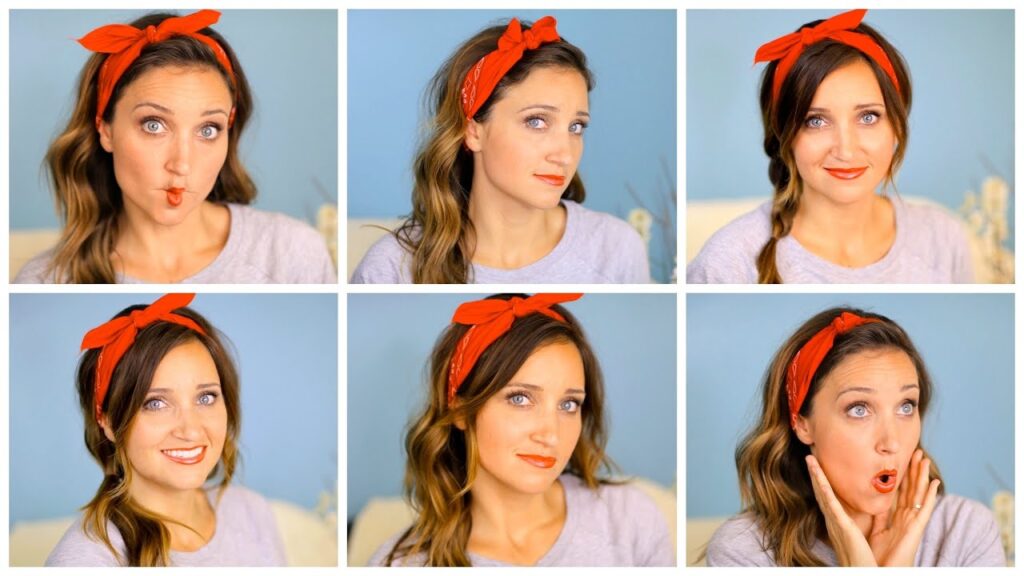
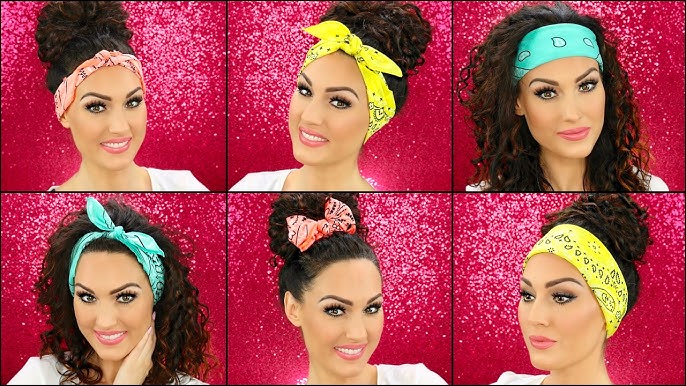
1. Classic Headband Style
The headband is the most popular bandana hairstyle for both men and women. Fold your bandana into a long strip (2-3 inches wide) using the band fold technique.
Place the center of the strip across your forehead or just above your hairline. Bring both ends around your head, crossing over your ears. Tie the ends at the nape of your neck, either tucking the knot under your hair or leaving it visible for a casual edge.
This style works with hair down, in a ponytail, or in a top knot. It’s perfect for keeping hair out of your face during workouts, outdoor activities, or just adding instant style to any outfit.
2. Pirate/Bandana Cap Style
The pirate bandana delivers bold, rebellious vibes and works for all genders. Fold your bandana into a triangle, then place the folded edge across your forehead.
Bring the two long ends around the back of your head and tie them together at the nape of your neck. The triangle point should hang down your back. Adjust the front portion to sit at your preferred height on your forehead.
This streetwear-approved style pairs perfectly with casual outfits, leather jackets, and urban aesthetics. Many musicians and skaters favor this look.
3. Rosie the Riveter/Retro Pin-Up Style
This vintage-inspired look radiates feminine confidence. Fold your bandana into a triangle, then place it over your head with the triangle pointing down your back.
Bring the two front corners up and over your head, crossing them on top. Tie them in a knot, then tuck the ends underneath to create a bow-like effect on top of your head.
This works beautifully with victory rolls, pin curls, or straight hair. It’s ideal for vintage-themed events, photoshoots, or adding retro flair to modern outfits.
4. Boho Gypsy Head Wrap
The bohemian head wrap exudes free-spirited, festival-ready energy. Fold your bandana into a wide band (3-4 inches), then place it across your forehead like a crown.
Tie the ends at the back of your neck, letting the knot hang loose or tucking it under. You can position this higher on your head for a hippie vibe or lower for a more subtle look.
Pair this style with flowing dresses, layered jewelry, and earthy tones for maximum boho impact.
5. Crown/Top Knot Bandana
This regal style positions the bandana as a decorative crown element. Fold into a band, then place it around your head like a headband but position it slightly back from your hairline.
Bring the ends up to the top of your head and tie them in a knot. You can leave the ends loose, create a bow, or tuck them under for a clean finish.
This works exceptionally well with high buns, top knots, or slicked-back hair. It’s become a favorite among dancers and performers.
6. Side-Tied Bandana Headband
For an asymmetrical, fashion-forward look, try the side-tie. Fold your bandana into a band and place it around your head as you would for a classic headband.
Instead of tying at the back, bring both ends to one side of your head (above or behind your ear) and tie them there. Leave the ends flowing or tuck them in.
This adds instant personality and works beautifully with beach waves, braided hair, or sleek ponytails.
Different Ways to Wear a Bandana Around Your Neck
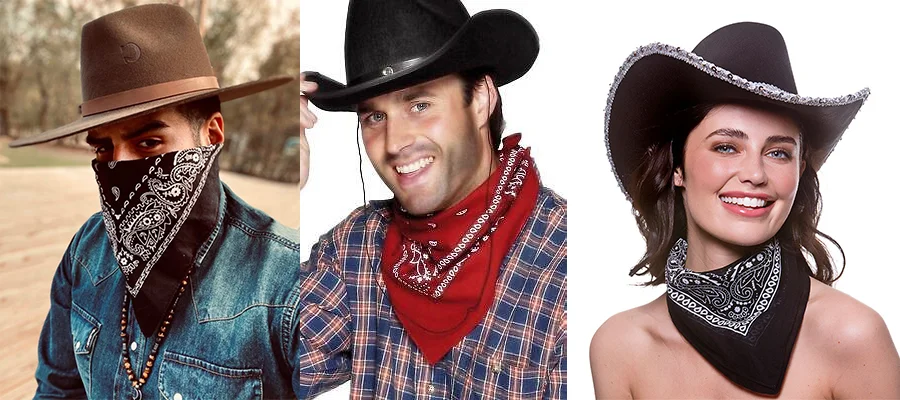
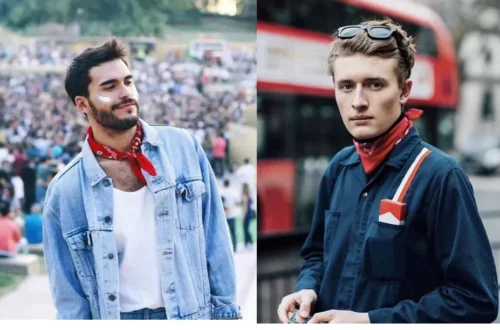
7. Classic Neckerchief/Cowboy Style
The neckerchief is timeless, elegant, and works for everyone. Fold your bandana into a triangle, then place the folded edge across your chest with the triangle point facing down.
Wrap the two long ends around your neck and tie them at the front, either in a simple knot or small bow. The triangle should rest on your chest pointing downward.
This style works over t-shirts, under blazers, or with button-down shirts. It adds instant sophistication to casual outfits.
8. Choker/Tight Neck Wrap
For a modern, edgy look, wear your bandana as a choker. Fold it into a very thin strip (1-2 inches wide) for a sleek appearance.
Wrap it tightly around your neck and tie it at the front or side with a small knot. Make sure it’s snug but comfortable—not restricting breathing.
This 90s-inspired style pairs perfectly with crop tops, slip dresses, and minimalist outfits. It’s trendy yet simple to execute.
9. Loose Neck Scarf/French Style
The French neck scarf offers effortless Parisian chic. Fold your bandana into a triangle, then fold the long edge inward once to create a narrower triangle.
Drape it loosely around your neck with the point either at front or back. Tie the ends in a relaxed knot—not too tight—letting it sit comfortably.
This works beautifully with trench coats, striped shirts, and sophisticated ensembles. It’s the quintessential “I didn’t try but look amazing” accessory.
10. Half-Windsor Bandana Tie
This menswear-inspired style mimics a formal tie but with bandana flair. Fold your bandana into a long, narrow strip.
Place the center of the strip at your collarbone with both ends hanging evenly. Cross the right end over the left, then bring it up and through the neck loop. Pull it down through the knot you’ve created and adjust for symmetry.
This creative technique works best with collared shirts and blazers, offering a unique alternative to traditional neckties.
11. Statement Knot Necklace
Transform your bandana into a cloth necklace with personality. Fold it into a triangle, then fold the opposite point inward twice to create a band.
Tie a decorative knot in the middle of the band—you can make it simple or complex depending on your skill level. Then tie the bandana around your neck with the decorative knot centered at your throat.
Layer this with actual jewelry for maximum impact. It works beautifully with simple, solid-colored outfits that need a pop of pattern.
Different Ways to Wear a Bandana in Your Hair
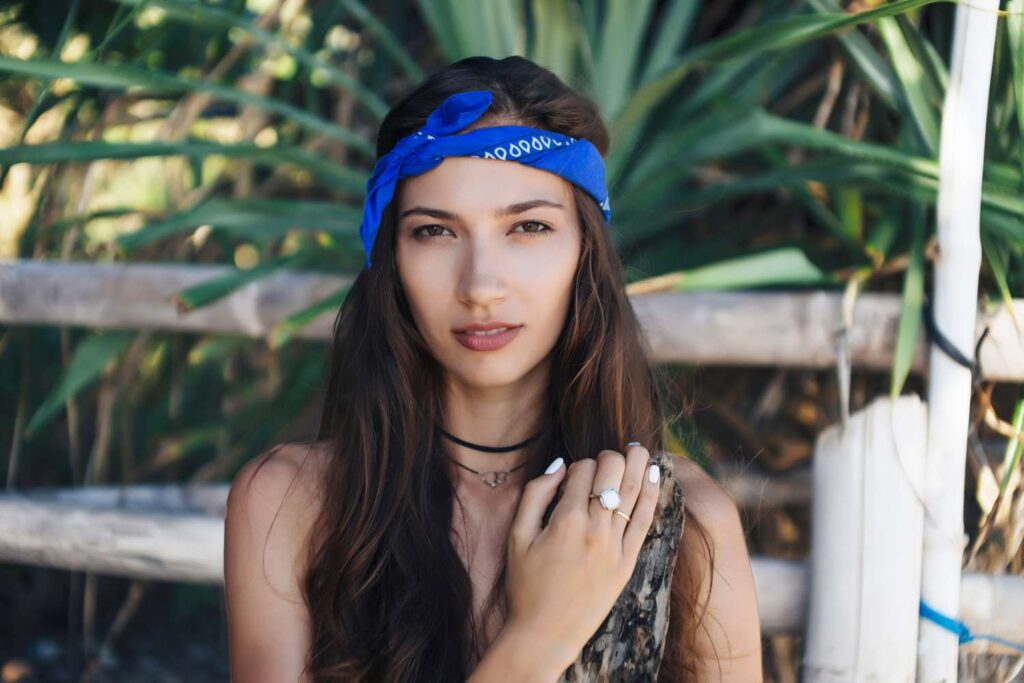
12. Ponytail Wrap/Scrunchie Alternative
Elevate a basic ponytail instantly with a bandana wrap. First, secure your hair in a ponytail with a regular hair elastic for support.
Fold your bandana into a band, then wrap it around the base of your ponytail twice. Tie the ends in a knot, either leaving them loose or tucking them under.
This adds color, texture, and visual interest to an otherwise simple hairstyle. It works with high ponytails, low ponytails, or side ponytails.
13. Braided Bandana Style
Integrate your bandana directly into a braid for bohemian beauty. Fold a long scarf or bandana in half lengthwise to create a thin strip.
Position it around your head like a headband, then incorporate the two hanging ends into a regular three-strand braid along with your hair. The bandana becomes one of the three sections.
Secure with a hair tie at the end. This creates beautiful texture and dimension, perfect for festivals, beach days, or casual weekends.
14. Hair Ribbon/Bow Accent
Use your bandana as a decorative hair ribbon. Fold it into a thin band, then weave it through a braid, wrap it around a bun, or tie it into a bow at the end of a ponytail.
This adds a playful, youthful element to any hairstyle. It’s particularly charming with space buns, pigtails, or half-up styles.
15. Twisted Headband with Bun
This elegant updo combines a twisted bandana with a low or high bun. Create your bun first, securing it at your desired height.
Place your folded bandana across your hairline with equal lengths on both sides. Twist the two ends together once under your bun, then bring them back up and tie them over the bun. Twist the remaining ends together and pin them to one side for an off-center finish.
This sophisticated style works for weddings, formal events, or when you want an elevated everyday look.
Creative Bandana Styling Beyond Head and Neck
16. Wrist Bracelet/Cuff
Turn your bandana into statement wristwear. Fold it into a thin strip (about 1 inch wide), then wrap it around your wrist twice or three times depending on length.
Tie it in a knot or bow to secure. Layer it with watches, bangles, and other bracelets for a bohemian stacked look.
This subtle styling works well when you want to incorporate bandana style without making it the focal point of your outfit.
17. Ankle Accessory
Channel laid-back summer vibes by wearing your bandana around your ankle. Roll it into a thin rope or fold it into a narrow band.
Wrap it around your ankle and tie it comfortably—not too tight. This works best when barefoot or wearing sandals, adding an unexpected detail to beach or casual looks.
It’s a favorite among festival-goers and free spirits who appreciate unconventional accessorizing.
18. Belt/Waist Wrap
Bandanas make excellent belt alternatives or waist accents. Fold or roll your bandana, then thread it through your jeans’ belt loops like a regular belt.
Alternatively, tie it around your waist over a dress, long shirt, or high-waisted pants. Knot it at the front, side, or back depending on your desired look.
This adds instant personality and can help define your waistline in flowing garments. It’s one of 2026’s biggest accessory trends.
19. Bag Charm/Purse Accent
Elevate your handbag with a bandana charm. Roll or fold your bandana into a strip, then wrap it around your bag’s handle or strap.
Tie it in a knot or bow, letting the ends flow freely. This adds color and visual interest to neutral bags or complements patterned purses.
It’s an easy way to customize your accessories and make them feel fresh without buying new items.
20. Back Pocket Hanky/Workwear Style
This classic workwear look pays homage to traditional bandana use. Fold your bandana in half, then fold it in half again to create a square.
Tuck half of the folded bandana into your back pocket, leaving the other half hanging out. This creates a practical yet stylish look popularized by workers and later adopted by fashion enthusiasts.
It works best with jeans, work pants, or overalls. The bandana stays accessible for actual use while adding visual appeal.
Gender-Specific Bandana Styling Tips
Bandana Styles for Men
Masculine Bandana Approaches: Men often prefer simpler, more understated bandana styles that add subtle personality without appearing overly decorative.
The classic headband, pirate cap, and neckerchief work particularly well for men. Keep folds clean and tight, avoid bows, and choose solid colors or traditional paisley patterns.
Best Colors for Men: Navy blue, black, red, gray, olive green, and burgundy are safe masculine choices. These colors pair easily with typical men’s wardrobes.
Camouflage, skull patterns, and geometric prints also work well for men who want something beyond solid colors.
Styling with Menswear: Pair bandanas with leather jackets, denim, flannel shirts, work boots, and casual sneakers. The key is balancing the bandana’s decorative nature with masculine clothing items.
Bandana Styles for Women
Feminine Bandana Approaches: Women have unlimited freedom with bandana styling. From delicate hair ribbons to bold statement pieces, every method works.
Bows, intricate folds, and layered accessories are all fair game. Women can also experiment with bandanas as tops, sarongs, or dress accents.
Best Colors and Patterns for Women: Any color works for women, but pastels, florals, and vibrant prints are particularly popular. Silk bandanas in jewel tones add luxury.
Mix patterns confidently—a bandana’s print can complement or contrast with your outfit’s existing patterns.
Styling with Women’s Fashion: Bandanas pair beautifully with sundresses, crop tops, high-waisted jeans, bikinis, rompers, and feminine blouses. They add both function and flair.
Bandana Styling by Occasion
Casual Everyday Wear
For daily outfits, keep bandana styling simple and functional. Headbands, ponytail wraps, and loose neck scarves work perfectly with jeans, t-shirts, and sneakers.
Choose comfortable cotton bandanas in colors that match multiple outfits in your wardrobe. The goal is effortless enhancement, not costume-like appearance.
Workout and Athletic Looks
Bandanas excel as workout accessories. Wear them as headbands to absorb sweat and keep hair controlled during exercise.
The classic headband and pirate cap styles work best for gym sessions, running, cycling, or yoga. Choose moisture-wicking fabrics when possible.
Festival and Concert Style
Festivals are bandana paradise. Experiment with bold colors, layered accessories, and creative styling combinations.
Try the boho head wrap, braided styles, or wearing multiple bandanas at once—as a headband, wrist cuff, and bag charm simultaneously.
Beach and Vacation Vibes
Beachwear pairs naturally with bandanas. Use them as head scarves to protect from sun, tie them as sarongs over swimwear, or wear them as ankle bracelets.
Bright colors and tropical prints enhance vacation aesthetics. The French neck scarf works beautifully with beach cover-ups.
Professional and Office Appropriate
Yes, bandanas can work in professional settings when styled conservatively. The classic neckerchief under a blazer looks polished and sophisticated.
Choose silk bandanas in solid colors or subtle patterns. Avoid overly casual styling like pirate caps or athletic headbands in corporate environments.
Formal Events and Dressy Occasions
Silk bandanas elevate formal outfits when styled carefully. The statement knot necklace or twisted headband with elegant updos work for weddings and special events.
Metallic accents, luxurious fabrics, and refined colors (black, champagne, burgundy) keep bandanas appropriate for dressy occasions.
Choosing the Right Bandana: Materials, Sizes, and Patterns
Material Guide
Cotton Bandanas: Cotton is the most common and versatile bandana material. It’s breathable, durable, affordable, and works for everyday wear.
Cotton bandanas work in all seasons, hold folds well, and come in endless colors and patterns. They’re perfect for beginners.
Silk Bandanas: Silk offers luxury, smoothness, and elegant drape. These bandanas feel premium and look sophisticated in neck scarf styling.
Silk works best for dressy occasions and adds polish to simple outfits. They’re slippery, so they require secure knots.
Satin Bandanas: Satin provides silk’s glossy appearance at a lower price point. It’s a good middle-ground option for those wanting elegance without high cost.
Satin works for both casual and formal styling, though it may not feel as breathable as cotton.
Specialty Materials: Chiffon creates flowing, romantic looks. Denim offers textured, casual appeal. Lace adds delicate, feminine touches.
Each material serves specific aesthetic purposes, so choose based on your styling goals.
Size Considerations
Standard Square (22 x 22 inches): This is the most versatile size, perfect for all styling methods. It’s large enough to tie comfortably but not overwhelming.
Most bandanas you’ll find are this size. It works equally well for head, neck, wrist, and bag styling.
Large/Oversized (28+ inches): Oversized bandanas are trending in 2026. They work beautifully as scarves, shawl-like accessories, or sarongs.
The extra fabric provides more styling options but can be bulky for smaller applications like wrist wraps.
Small/Mini (16 x 16 inches or smaller): Small bandanas excel as wrist accessories, bag charms, or pocket squares. They’re cute and compact but limiting for head wraps.
These work well for subtle bandana incorporation without making a bold statement.
Pattern and Color Selection
Classic Paisley: The traditional bandana pattern never goes out of style. It’s recognized globally and works in western, bohemian, and streetwear aesthetics.
Red and navy paisley are most iconic, but paisley now comes in every color imaginable.
Solid Colors: Solid bandanas offer maximum versatility. They pair with any outfit and don’t compete with other patterns you’re wearing.
Black, white, red, and navy are wardrobe staples. Pastels work for spring/summer; jewel tones for fall/winter.
Modern Prints: Abstract designs, florals, geometric patterns, and graphic art dominate 2026 trends. These make stronger style statements.
Typography bandanas, street art designs, and brand logos appeal to younger, trend-focused wearers.
Seasonal Considerations: Choose lighter colors and breathable fabrics for summer. Richer tones and heavier materials work better in fall and winter.
Holiday-themed bandanas (Halloween, Christmas) offer festive seasonal styling options.
Bandana Care and Maintenance Tips
Washing Your Bandanas
Cotton bandanas are machine washable in cold water. Wash them with similar colors to prevent bleeding, especially for new red or dark bandanas.
Silk and satin bandanas require hand washing or delicate machine cycles in cold water. Use gentle detergent and avoid harsh chemicals.
Air drying is best for all bandana materials. High heat can cause shrinkage, color fading, and fabric damage.
Storage Solutions
Roll or fold bandanas neatly and store them in a drawer organizer, small box, or hanging closet organizer with clear pockets.
This prevents wrinkles and makes it easy to see your entire collection when choosing which one to wear.
Removing Wrinkles
Iron cotton bandanas on medium-high heat to restore crisp appearance. For silk and satin, use low heat or a steamer.
You can also hang wrinkled bandanas in the bathroom while showering—the steam naturally releases wrinkles.
2026 Bandana Trends: What’s Hot Right Now
Oversized Silk Bandanas
The biggest trend of 2026 is oversized bandanas (28+ inches) made from luxury materials like silk and satin.
These are styled as statement scarves draped over shoulders, tied around waists, or worn as shawl-like accessories. Designers from Gucci to Fendi featured them prominently in recent collections.
Sustainable and Eco-Friendly Options
Organic cotton, hemp blends, and upcycled vintage bandanas align with environmental consciousness.
Brands producing ethical, sustainably-sourced bandanas are gaining popularity, particularly among younger consumers who prioritize eco-friendly fashion.
Bold Typography and Graphics
Street-inspired art, large logos, and graphic designs dominate bandana prints in 2026. These make strong visual statements.
This trend works best in urban, streetwear, and youth-oriented styling contexts.
Quiet Luxury Neutrals
On the opposite end, beige, cream, gray, and soft black bandanas are trending for minimalist, quiet-luxury aesthetics.
These subtle options work for sophisticated styling without loud patterns competing for attention.
Bandanas as Clothing
Innovative styling includes using bandanas as actual clothing pieces—tops, bikini alternatives, or skirt wraps.
This requires larger bandanas and creative tying techniques but represents fashion-forward thinking in 2026.
Common Bandana Styling Mistakes to Avoid
Mistake 1: Wrinkled or Dirty Bandanas
Always use clean, freshly pressed bandanas. Wrinkled or stained bandanas look sloppy and ruin otherwise polished outfits.
Take a moment to iron or steam your bandana before wearing it, especially for special occasions or professional settings.
Mistake 2: Tying Too Tight or Too Loose
Finding the right tightness is crucial. Too tight causes discomfort and headaches; too loose looks messy and falls off.
Adjust your knots until they feel secure but comfortable. You should be able to fit one finger between the bandana and your skin.
Mistake 3: Pattern Overload
Wearing multiple busy patterns simultaneously—patterned bandana with patterned clothing—creates visual chaos.
If your outfit has bold prints, choose a solid bandana. If your clothing is simple, the bandana can be your pattern statement.
Mistake 4: Wrong Size Selection
Using a too-small bandana for head wraps or too-large for wrist accessories looks awkward.
Match bandana size to your intended styling method. Standard 22×22 works for most applications.
Mistake 5: Ignoring Hair Type
Bandana styling should complement your hair texture and length. What works for straight hair may not suit curly or afro-textured hair.
Research bandana methods specifically designed for your hair type to avoid frizz, breakage, or unflattering appearance.
Bandana Styling for Different Hair Types
Straight Hair
Straight hair works with virtually all bandana styles. The smooth texture holds folds cleanly and creates polished looks.
Headbands, ponytail wraps, and braided styles all work beautifully. Your main concern is ensuring the bandana stays secure since straight hair can be slippery.
Curly and Wavy Hair
Curly hair benefits from bandanas that help control frizz while showcasing natural texture. Wide headbands and boho wraps work particularly well.
When tying bandanas with curly hair, avoid pulling too tightly, which can cause breakage. Allow curls to frame your face naturally.
Afro and Textured Hair
Protective styling is key when wearing bandanas with afro-textured hair. Choose silk or satin bandanas to minimize friction and frizz.
Wide bandanas work better than thin strips. The Rosie the Riveter and crown styles are favorites in natural hair communities.
Short Hair
Short hair actually works wonderfully with bandanas. Headbands and pirate caps add dimension and style to pixie cuts and bobs.
Neck scarves also shine with short hair since there’s no hair to cover the beautiful knots and folds.
Long Hair
Long hair offers maximum bandana versatility. Braided techniques, elaborate head wraps, and ponytail styling all work beautifully.
You can also use multiple bandanas at once—one in hair, one around neck—without looking overdone.
DIY Bandana Projects and Customization Ideas
Creating Custom Prints
Personalize plain bandanas using fabric paint, bleach tie-dye, or permanent markers. This creates one-of-a-kind pieces.
You can also use fabric stamps, stencils, or iron-on transfers to add custom designs, initials, or meaningful symbols.
Embroidery and Embellishments
Add hand embroidery, sequins, beads, or patches to transform basic bandanas into statement pieces.
This works particularly well for vintage or bohemian aesthetics. Embellished bandanas become wearable art.
Sewing Multiple Bandanas Together
Create larger scarves, skirts, or even quilt-like wall hangings by sewing multiple bandanas together.
This is perfect for using bandanas you love but are too small for your preferred styling methods.
Frequently Asked Questions (FAQs)
What are different ways to wear a bandana?
You can wear bandanas as headbands, neck scarves, wrist bracelets, ankle accessories, bag charms, belts, pocket squares, ponytail wraps, or braided into hair. There are 25+ styling methods for different occasions and aesthetics.
How do men wear bandanas stylishly?
Men look best in classic styles like headbands, pirate caps, neckerchiefs, or back pocket hankies. Choose solid colors or traditional paisley, keep folds clean, and pair with masculine clothing like leather jackets, jeans, and work boots.
Can you wear a bandana to work or formal events?
Yes, when styled conservatively. Wear silk bandanas as neckerchiefs under blazers for professional settings. For formal events, use silk bandanas with elegant updos or as statement necklaces paired with dressy attire.
What size bandana is best for styling?
The standard 22 x 22 inch square bandana is most versatile, working for all styling methods. Oversized bandanas (28+ inches) are trending for scarves and wraps, while small bandanas work best for wrist accessories and bag charms.
How do you tie a bandana around your head?
Fold the bandana into a triangle, then fold into a 2-3 inch band. Place it across your forehead, wrap ends around your head over ears, and tie at the nape of your neck. Adjust tightness for comfort.
What’s the difference between cotton and silk bandanas?
Cotton bandanas are breathable, durable, affordable, and work for everyday casual wear. Silk bandanas feel luxurious, drape elegantly, work for formal occasions, but cost more and require delicate care.
How do you keep a bandana from slipping off?
Tie knots tightly but comfortably, use bobby pins to secure at pressure points, or wear a thin headband underneath for extra grip. For hair accessories, use a hair elastic first before adding the bandana.
Can you wear a bandana with curly or afro hair?
Absolutely! Choose silk or satin bandanas to minimize frizz, avoid tying too tightly, and use wide bandanas rather than thin strips. The crown style and wide headbands work beautifully with textured hair.
How do you wash and care for bandanas?
Cotton bandanas are machine washable in cold water with similar colors. Silk and satin require hand washing or delicate cycles. Air dry all bandanas to prevent shrinkage and fading. Iron cotton on medium-high heat; silk on low.
Are bandanas still in style for 2026?
Yes, bandanas are major fashion trends in 2026, appearing in collections from Gucci, Chanel, and Fendi. Oversized silk versions, sustainable materials, and graphic prints are particularly popular right now.
Conclusion
Different ways to wear a bandana offer unlimited creative possibilities for both men and women in 2026, transforming this humble accessory into a versatile style essential.
From classic headbands and neckerchiefs to innovative applications as belts, bag charms, and braided hair accents, bandanas adapt to every personal aesthetic and occasion.
The key to mastering bandana styling lies in understanding basic folding techniques, choosing appropriate materials for your intended use, and matching styles to your outfit’s formality level.
Whether you prefer minimalist solid colors or bold graphic prints, there’s a bandana styling method perfect for your wardrobe.