
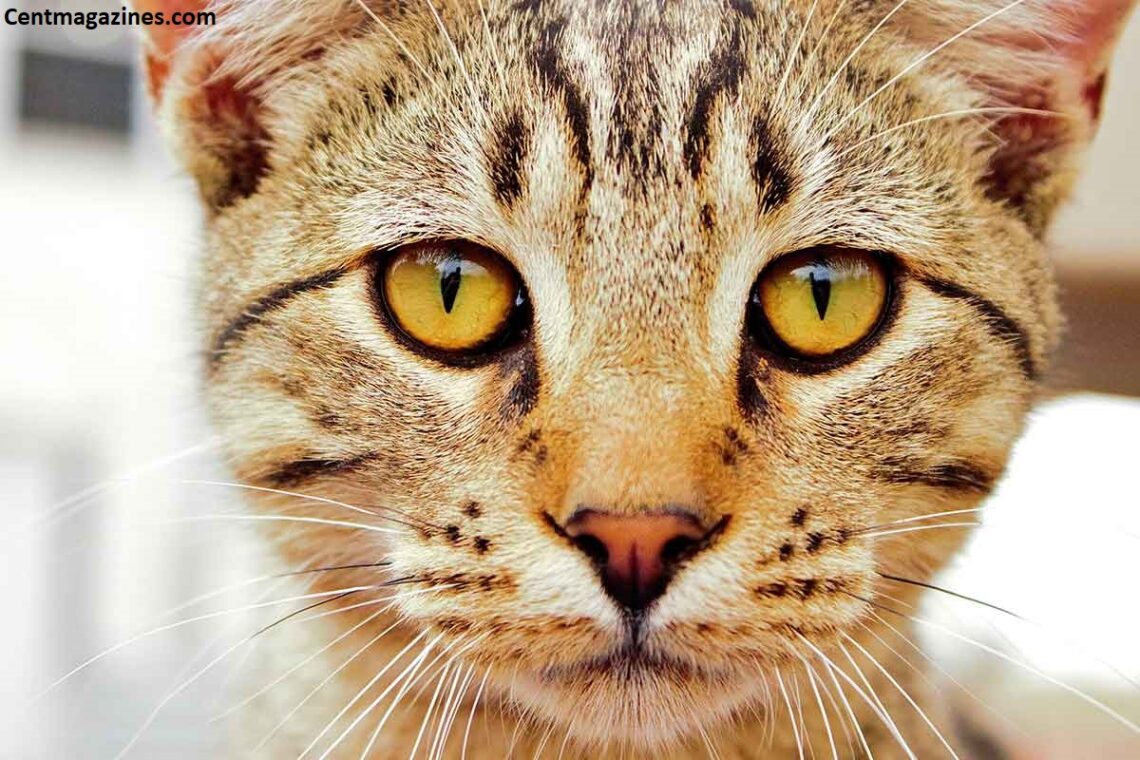
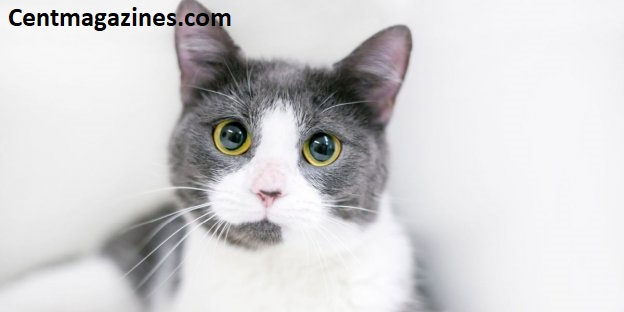
Why Do Cats Pupils Get Big? A cat’s pupils are built for survival. Those striking, wide-open eyes are not just beautiful — they are functional, shifting rapidly in response to the world around them.
In low light, pupils expand dramatically to capture every available photon, giving cats their legendary night vision. But light is not the only trigger.
Excitement, fear, and playfulness all cause pupils to dilate. A cat spotting a toy, sensing danger, or preparing to pounce will show wide, dark eyes — pure instinct made visible.
Even affection can trigger mild dilation.
Those big, dark pupils are a window into exactly what your cat is feeling.
Table of Contents
Quick Table
| # | Reason for Dilation | Pupil Size | What It Means |
|---|---|---|---|
| 1 | Low Light / Darkness | Very Large | Capturing maximum light |
| 2 | Hunting / Prey Spotted | Large | Focus and predator instinct |
| 3 | Fear or Threat | Very Large | Fight or flight response |
| 4 | Excitement / Playfulness | Large | High energy and engagement |
| 5 | Affection / Contentment | Slightly Large | Relaxed and happy |
| 6 | Surprise or Startle | Very Large | Sudden sensory overload |
| 7 | Pain or Discomfort | Very Large | Stress response |
| 8 | Medication or Drug Effect | Very Large | Chemical reaction |
| 9 | Bright Light | Very Small | Protecting the retina |
| 10 | Aggression | Large or Narrow | Depends on attack or defence mode |
Why Do Cats Pupils Get Big?
I’ll be honest — the first time I really noticed my cat’s pupils going massive was a Tuesday evening, and it genuinely freaked me out.
Mochi, my three-year-old tabby, was sitting on the kitchen counter (yes, I know, I gave up trying to stop that), and I walked in from behind her.
She spun around, and her eyes went from those calm, half-squinted slits to enormous black dinner plates — almost instantly. No hissing. No running. Just this wide-eyed stare like I’d told her rent was going up.
I remember thinking: Is she sick? Is something wrong? I actually Googled “cat eyes suddenly huge” at 10pm while she sat there judging me.
Turns out, there’s a lot going on behind those dramatic eyes — and once you understand it, you start reading your cat completely differently.
It’s Not One Thing. It’s Like Five Things.
This is where most articles lose people — they act like there’s one reason cat pupils dilate. There isn’t. It’s situational.
The same behavior (big pupils) can mean totally different things depending on what’s happening in the room.
Here’s what I’ve learned from a mix of research, a vet visit, and two years of basically studying Mochi like she’s a college thesis.
Low Light (The Most Obvious One)
Cats are crepuscular animals — meaning they’re most active at dawn and dusk. Their eyes are built for dim environments.
When light drops, the pupils dilate to let in as much light as possible. This is the same reason your own pupils get bigger in a dark room. But cats take it to an extreme.
A cat’s pupil can dilate up to 135 times its minimum size — humans max out around 15 times. That’s not a typo.
So if you walk into a dimly lit room and your cat’s eyes look huge — that’s just physics. Nothing dramatic. Nothing wrong.
Practical tip: If you’re checking your cat’s eyes for health reasons, always do it in a well-lit room. In dim light, big pupils are completely normal.
Excitement or Prey Mode
This one took me longer to notice, but it’s now one of my favorite things to watch.
Whenever I bring out Mochi’s feather wand — even before I start waving it — her pupils explode. Same thing happens when she spots a moth on the ceiling or hears a bird outside the window.
The technical explanation: when a cat switches into “hunt mode,” the sympathetic nervous system kicks in. Adrenaline gets released. The pupils dilate to improve visual acuity and peripheral vision.
It’s essentially the same fight-or-flight response, except your cat is about to destroy a toy mouse.
You’ll also notice the body language that goes with it: low crouching, tail flicking, butt wiggling before the pounce. The huge pupils are basically part of the pre-launch sequence.
Fear or Startlement (This Was My Tuesday)
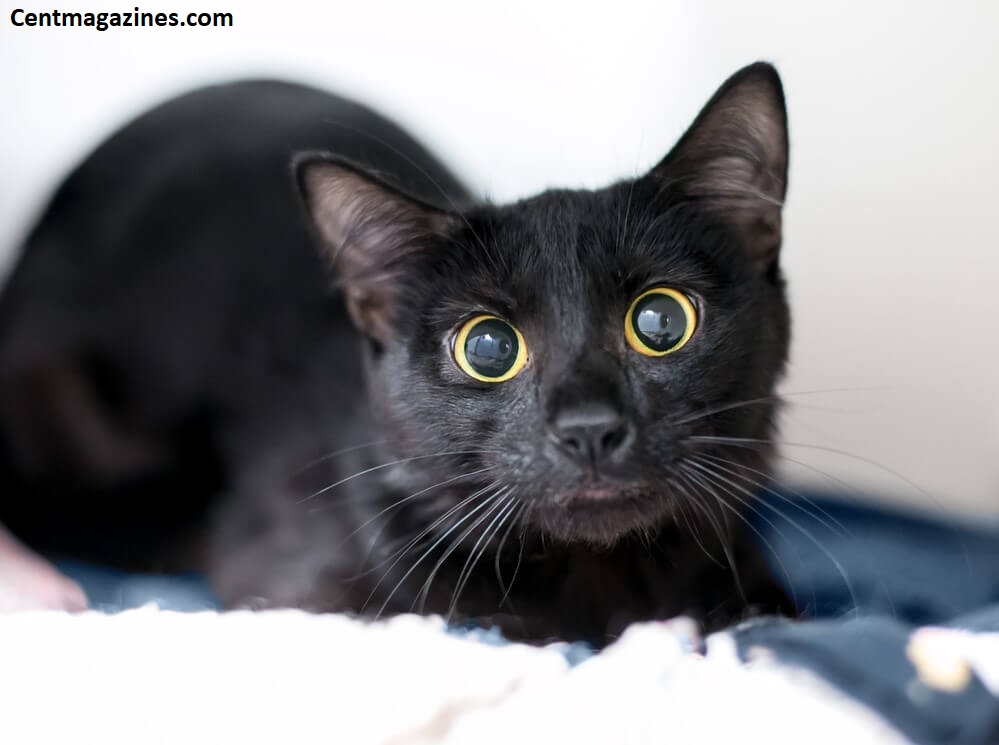
Back to my kitchen incident — Mochi’s sudden big pupils were a fear response. I’d startled her, her nervous system fired, and her eyes went wide.
Fear-based dilation looks a lot like excitement dilation, which is why context matters so much. But here’s how I tell them apart now:
- Excitement = pupils dilate, but the cat is toward something (toy, window, bird)
- Fear = pupils dilate AND the cat is leaning away, ears go flat, tail puffs up
Mochi’s ears went slightly back when she saw me that night. She relaxed almost immediately when I talked to her — but for a second, she was definitely alarmed.
If your cat’s pupils get big and they’re making themselves smaller, backing into a corner, or their fur is standing up — that’s fear. Worth noting what triggered it.
Affection and Overstimulation (The Sneaky One)
Okay, this one surprised me when I first read about it.
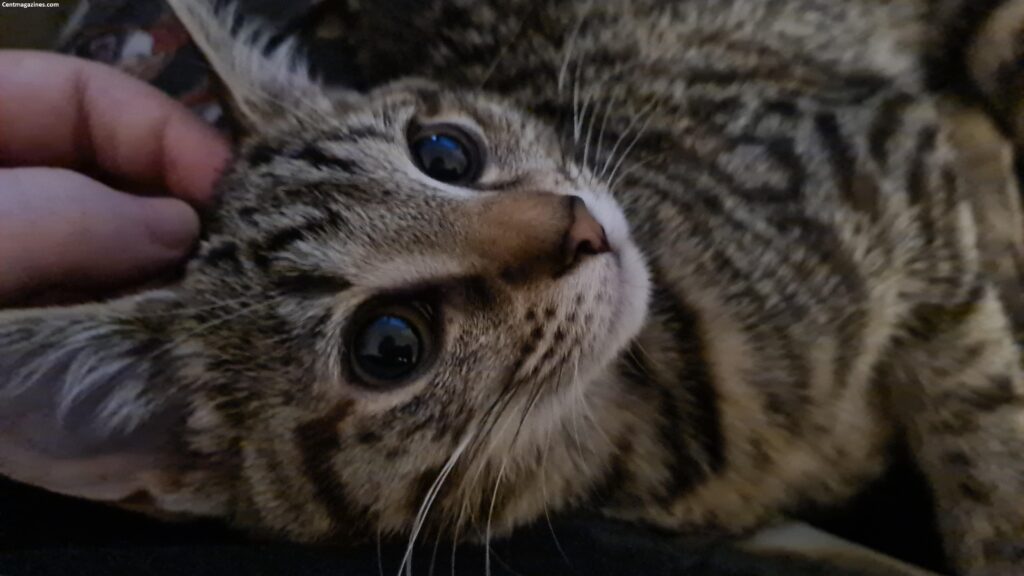
Cats can also get dilated pupils during positive, loving moments — like when you’re petting them and they’re really into it. The arousal isn’t negative; it’s just… intense. Their nervous system is activated either way.
BUT — and this is important — if you’re petting your cat and the pupils suddenly dilate while they’ve been totally calm, it can also signal overstimulation. This is the “love bite” warning sign. The cat was fine, then suddenly it wasn’t, and the pupils often change right before they swat or nip.
I learned this the embarrassing way. I was giving Mochi a long belly rub (she was tolerating it, not loving it), didn’t notice her pupils had gone wide, and got a solid scratch on the hand. Totally my fault in retrospect.
Watch for: pupils dilating suddenly during calm petting + tail starting to twitch + skin rippling = time to stop and give some space.
Pain or Illness (The One You Should Know)
This is the one that matters most from a health perspective.
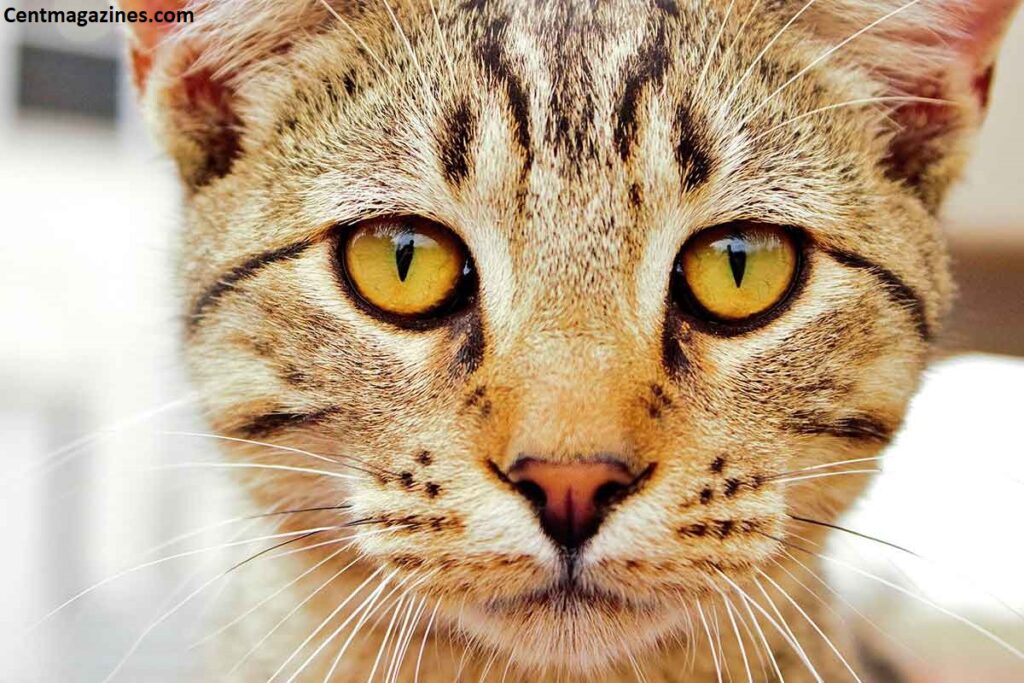
If your cat’s pupils are persistently dilated — meaning they stay large even in bright light, for hours, when the cat isn’t playing or scared — that can be a medical sign worth taking seriously.
Conditions that can cause this include:
- Hypertension (high blood pressure) — really common in older cats
- Retinal detachment
- Neurological issues
- Certain toxins (like some plants or medications)
- Feline dysautonomia (rare but serious)
Our vet actually caught Mochi’s mild hypertension early because I mentioned her pupils sometimes looked unequal — one bigger than the other. That’s called anisocoria, and it’s a signal to get things checked.
The rule I follow: If your cat’s pupils look big in normal, bright lighting conditions, and they’ve been that way for more than an hour without obvious excitement or fear — call your vet. Not emergency-panic call, but don’t ignore it either.
How to Actually Read Your Cat’s Eyes in Real Life
Here’s a quick cheat sheet I’ve built from experience:
Slits (very narrow): Bright light, OR your cat is really content and relaxed. A slow blink from a cat with slit pupils is basically “I love you” in cat language.
Round and medium: Neutral. Cat is chilling, alert but not activated.
Large and round: Low light, excitement, fear, or affection-overload. Check the rest of the body language.
Huge and asymmetric: Vet. Soon.
Common Mistakes People Make
Mistaking fear for excitement. I did this constantly at first. Big pupils + playing with toy = fun. Big pupils + hiding under the bed = stressed cat. Same eyes, totally different situation.
Dismissing persistent dilation. “Oh she just looks like that.” Nope. If it’s happening in daylight without a stimulus, it’s worth mentioning to a vet.
Thinking a dilated-pupil cat is always happy. Some people see the big, wide eyes and think their cat looks cute and engaged. Sometimes that’s true. Sometimes the cat is overwhelmed and about to tell you firmly with their claws.
Using flash photography. Not related to health, but please — the flash confuses and temporarily distresses cats (and the photo always looks weird). Use soft lighting if you want to capture those gorgeous eyes.
What About Those Vertical Slits?
Quick side note because people ask this a lot — the shape of a cat’s pupil (vertical slit) is actually an evolutionary feature that helps cats judge distance to prey more accurately.
Vertical slits create a specific kind of depth perception that’s ideal for ambush predators who hunt close to the ground.
Big cats like lions and tigers, by the way, have round pupils — because they hunt in open daylight and don’t need the same close-range depth tricks.
Your housecat’s vertical slits are basically precision optics for hunting things that are roughly sofa-cushion distance away.
Final Thoughts (From Someone Who Now Spends Way Too Much Time Watching Cat Eyes)
Understanding why your cat’s pupils change sizes genuinely makes you a better cat owner. Not in a dramatic way — but you stop panicking over normal things, and you catch the actually meaningful signals faster.
Mochi’s eyes still go dinner-plate huge sometimes, and now I immediately know whether she needs space, a play session, a bright light, or a vet visit. Most of the time it’s just the feather wand.
If your cat’s eyes are doing something new, strange, or persistent — don’t just Google it at 10pm like I did. Call your vet and describe exactly what you’re seeing. They’re surprisingly good at triaging over the phone.
And if your cat’s just sitting there with huge, dramatic eyes staring at literally nothing on the wall — welcome to cat ownership. Some questions don’t have answers.
FAQ’s
Why do my cat’s pupils get big when playing?
During play, a cat’s brain triggers the same instincts as hunting. Excitement and focus cause the pupils to dilate widely, sharpening visual awareness and preparing the body for fast, precise movement.
Should I be worried if my cat’s pupils are always dilated?
Occasional dilation is completely normal. However, if your cat’s pupils remain permanently large regardless of light conditions, it could indicate pain, neurological issues, or toxin exposure — a vet visit is recommended.
Can a cat’s pupils dilate from emotion alone?
Yes. Cats experience genuine emotional responses that directly affect pupil size. Fear, excitement, affection, and surprise can all trigger dilation entirely independent of lighting conditions.
Why does one pupil sometimes appear larger than the other?
Unequal pupils, known as anisocoria, can signal a serious underlying condition such as a neurological problem, eye injury, or infection. This always warrants prompt veterinary attention.
Do cats’ pupils work differently from human pupils?
Significantly. Cat pupils are elliptical rather than round, allowing far greater range of dilation and contraction. This gives cats superior control over light intake compared to human eyes.
Conclusion
A cat’s eyes are one of nature’s most remarkable designs. Elegant on the surface, extraordinarily complex underneath — built not for beauty, but for survival, precision, and connection.
Those widening pupils tell a story every time.
They speak of a predator locked onto movement, a frightened animal preparing to flee, a contented companion relaxed in a safe and familiar space. Learning to read them is one of the most rewarding parts of understanding the creature sharing your home.
What makes cat pupils particularly fascinating is how much emotion they reveal in an animal often dismissed as distant or unreadable.
The truth is quite the opposite. Cats communicate constantly — through posture, sound, and most vividly, through their eyes.
As an owner, paying attention to pupil size alongside other body language creates a fuller, more honest picture of your cat’s inner world.
It helps you respond appropriately — giving space when fear is present, engaging when excitement is genuine, and seeking help when something feels medically wrong.
The eyes, as they say, never lie. In cats, that truth is written in striking detail — shifting, adjusting, and reflecting the world with quiet, breathtaking precision.
So next time your cat looks at you with wide, dark eyes — look back. They are telling you something worth hearing.