
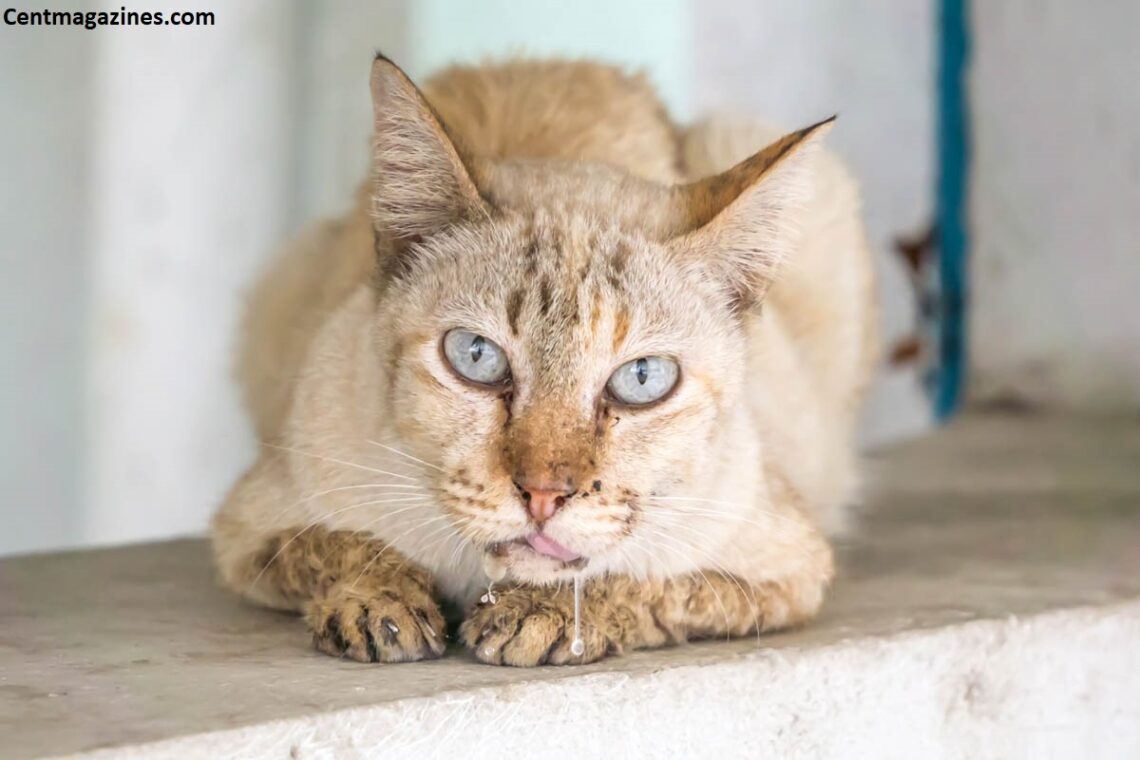
Why Is My Cat Drooling Thick Saliva? Thick saliva in cats can signal several issues worth paying attention to.
The most common causes include dental disease or tooth decay, mouth ulcers, nausea, or a foreign object stuck in the throat.
In some cases it points to kidney disease, poisoning, or a viral infection like calicivirus.
Occasional drooling during purring or relaxation is normal, but thick, ropy, or excessive saliva — especially paired with loss of appetite, lethargy, or pawing at the mouth — is a red flag.
If the drooling persists for more than a day or two, a vet visit is strongly recommended.
Table of Contents
Quick Table
| Cause | What it means | Other signs | Urgency |
|---|---|---|---|
| Dental disease | Tooth decay, gum infection, or abscesses irritate mouth tissues and increase saliva | Bad breath, pawing at mouth | See vet soon |
| Nausea | Motion sickness, hairballs, or upset stomach trigger excess thick saliva | Lip licking, lethargy | Monitor |
| Foreign object | Something stuck in throat or mouth causes gagging and heavy drooling | Gagging, choking sounds | Urgent |
| Kidney disease | Toxin buildup causes mouth ulcers and unusually thick, ropy drool | Weight loss, thirst | Urgent |
| Poisoning | Toxic plants, chemicals, or foods cause sudden excessive drooling | Vomiting, tremors | Emergency |
| Viral infection | Calicivirus or herpesvirus cause mouth sores that lead to drooling | Sneezing, sores | See vet soon |
| Normal relaxation | Some cats drool lightly when purring, kneading, or feeling very content | Purring, happy mood | Normal |
Why Is My Cat Drooling Thick Saliva?
By a cat owner who’s been through the panic — and learned a lot along the way · May 2026
“My cat was just sitting on the couch, and I noticed a thick, stringy drool hanging from his chin. I genuinely thought something was very wrong — and honestly, sometimes I was right to worry.”
The first time I saw my cat Mochi drooling that thick, goopy saliva, I completely froze. He’s a five-year-old tabby who has never been what you’d call a “drooler.
” Cats aren’t dogs — most of them don’t just leak saliva everywhere for fun. So when the drool is thick, ropey, or foamy, your brain goes straight to worst-case scenarios.
I did what most people do: spiraled into a Google rabbit hole at 11pm.
What I found was a mix of “probably fine” and “take him to the vet RIGHT NOW” — with very little middle ground.
So I want to give you something more useful: a real breakdown of what’s going on, what I actually learned from a vet visit (and one emergency visit), and
how to tell the difference between “watch and wait” and “we need to go now.”
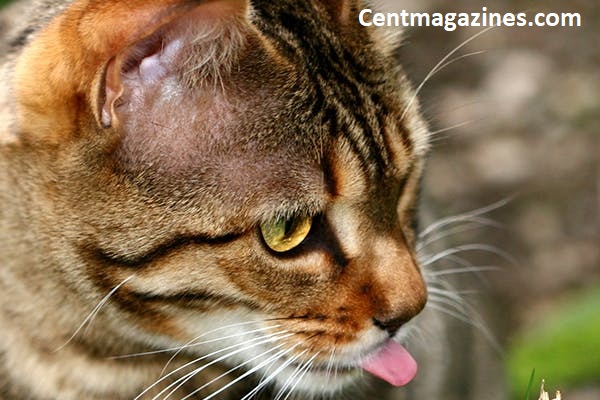
First — is drooling ever normal in cats?
Yes, but with caveats. Some cats drool lightly when they’re in a deep, happy state — kneading on a blanket, purring hard, getting intense chin scratches.
It’s sometimes called “bliss drool” and it’s linked to comfort behaviors that go all the way back to kittenhood nursing.
My previous cat used to leave tiny wet spots on my arm whenever I held her for long enough.
But thick saliva? That’s a different story. Light, watery drool during cuddles is one thing.
A thick, viscous, stringy substance hanging from your cat’s mouth — especially if it’s new behavior, or if your cat looks uncomfortable — is a signal worth paying attention to.
The main reasons cats drool thick saliva
Dental disease
The #1 culprit — gum inflammation, abscesses, tooth resorption
Nausea
Car sickness, ingesting something irritating, or systemic illness
Oral ulcers / URI
Calicivirus, herpesvirus — very common in cats
Toxic exposure
Plants, chemicals, medications — can trigger sudden hypersalivation
Kidney disease
Uremic ulcers in the mouth are a known complication
Anxiety / stress
Some cats drool in high-stress situations like vet visits or travel
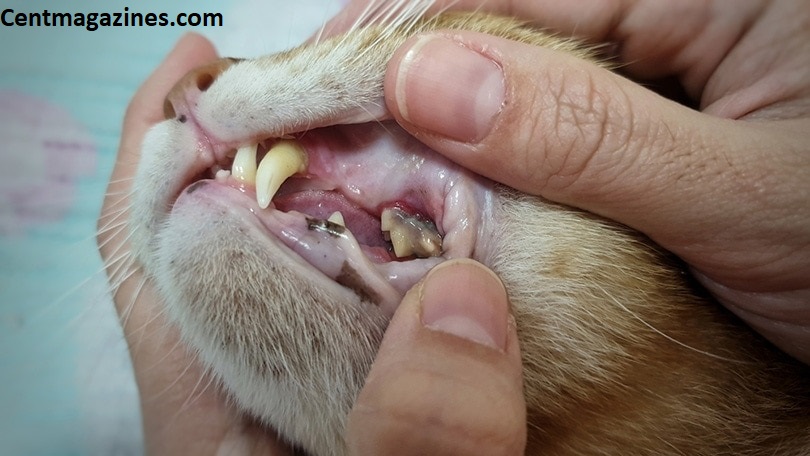
The dental disease explanation (this one surprised me)
When Mochi started drooling, I assumed it was something dramatic — poisoning, a tumor, something scary.
What it actually turned out to be was severe gingivitis and a resorptive lesion on one of his back teeth.
The vet said it’s one of the most common causes of thick drooling in cats over three years old, and most owners never notice because cats are very good at hiding pain.
The thick saliva happens because the infected or inflamed tissue in the mouth produces excess mucus-like secretions.
The drool isn’t thin and watery — it has that sticky, stringy quality because it’s mixed with inflammatory discharge. It often smells bad too (like really bad), which is another sign dental disease is involved.
Practical tip
Gently lift your cat’s upper lip near the back teeth. Healthy gums are pink and firm.
If you see bright red inflammation right along the gum line, swelling, or any kind of lesion that looks like a hole in the tooth — that’s worth a vet call, not a “wait and see.”
Nausea and the thick drool connection
Think about how your own mouth works when you feel nauseous. Saliva production spikes — it’s a protective reflex. Your body is literally preparing for the possibility of vomiting. Cats are the same way.
If your cat just ate something weird, licked a houseplant, got into cleaning products, or had a rough car ride — thick, excessive drooling paired with lip-licking and swallowing repeatedly is a classic “I feel sick” cluster of signs.
In those cases, the drool usually resolves once the nausea passes.
But here’s where I made a mistake: I assumed “nausea” meant something minor. The second time Mochi drooled like that, it was because he’d chewed on a peace lily.
Peace lilies are on the ASPCA’s toxic plant list and they cause intense oral irritation and sometimes kidney issues. That was an emergency vet visit I did not anticipate.
Go to the vet immediately if you see these signs
- Drooling started suddenly after being in a new area or chewing on a plant
- Pawing frantically at the mouth or face
- Drooling with vomiting, lethargy, or collapse
- Foamy or bloody saliva
- Difficulty swallowing or breathing changes
- The drool has a strong chemical smell
Upper respiratory infections and oral sores
Feline calicivirus and herpesvirus are incredibly common — especially in cats who’ve ever been in a shelter or multi-cat environment. Both can cause ulcers on the tongue, gums, and the roof of the mouth.
These ulcers are painful and trigger heavy salivation as a reflex.
If the drooling came on alongside sneezing, runny eyes, a stuffy nose, or any kind of lethargy — a respiratory infection with oral involvement is very likely.
This is especially true in kittens and young cats. My friend adopted a rescue kitten who had what looked like drool on his chin every morning, and it turned out to be calicivirus with mild tongue ulcers.
A course of supportive care and lysine supplementation sorted it out within a couple of weeks.
What about kidney disease or systemic illness?
This one tends to show up in older cats. When kidneys aren’t filtering waste properly, uremic toxins build up in the bloodstream and can cause ulcers inside the mouth.
Those ulcers produce the same thick, sometimes blood-tinged drool. It’s often paired with other signs of kidney disease:
weight loss, drinking more water than usual, reduced appetite, and a generally “off” appearance.
I know this sounds alarming. But if your cat is over eight years old and you’re noticing thick drooling alongside any of those other signs — blood work is just a good idea.
Caught early, kidney disease in cats is manageable for a long time.
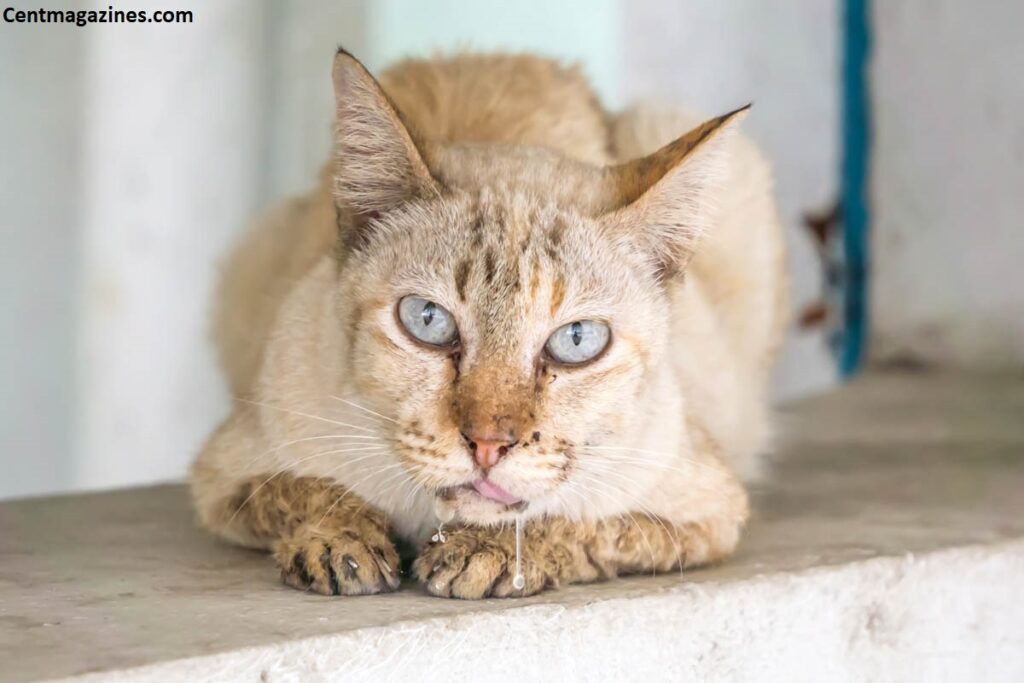
Step-by-step: what to do when you notice thick drooling
Don’t panic, but don’t dismiss it either. Observe your cat’s behavior for a few minutes. Is she acting normal otherwise — alert, moving around, eating? Or is she hiding, lethargic, pawing at her face?
Do a quick visual check. Look at the mouth if your cat will let you. Red gums, visible sores, or bad breath alongside the drooling narrows the cause significantly.
Check your environment. Any new plants in the house? Any cleaning products, essential oils (these are toxic to cats), rat poison, or medications within reach? This matters a lot.
Think about the timeline. Did this start suddenly in the last hour? Or have you been noticing it on and off for days or weeks? Sudden onset with behavioral changes = vet today. Gradual onset without other symptoms = vet soon, but not necessarily an emergency.
Call your vet. Even just describing it over the phone can help triage whether it’s a “come in today” or “schedule for next week” situation. Most vet clinics are happy to advise over the phone.
If you suspect poisoning, don’t wait. Call ASPCA Animal Poison Control (888-426-4435) or go to an emergency vet. Do not try to induce vomiting in cats at home — it can make things worse.
Common mistakes cat owners make
The biggest one I see — and made myself — is assuming it’ll “clear up on its own.” Sometimes it does. But dental disease, in particular, doesn’t get better without treatment.
Cats are stoic animals that mask pain extraordinarily well. By the time the drooling is obvious, they’ve often been uncomfortable for a while.
Another mistake: attributing it to stress and leaving it there. Yes, some cats drool during vet visits or car rides. But stress drooling is usually light and resolves quickly once the stressor is gone.
If it’s been happening for days or is thick and persistent, stress isn’t the full answer.
Watch out for this
Don’t try to treat oral issues with human pain relievers. Ibuprofen, acetaminophen, and aspirin are all toxic to cats. If your cat seems to be in oral pain, the only safe move is a vet visit — not a medicine cabinet raid.
What the vet will likely do
When I brought Mochi in, the vet did a physical exam focusing on the mouth and lymph nodes, then recommended blood work to rule out systemic causes.
For cats with suspected dental disease, they’ll usually want to do a proper dental exam under anesthesia — you simply can’t see what’s going on with the back teeth in a conscious cat who doesn’t want you poking around.
Mochi ended up needing a dental cleaning and the extraction of one badly resorbed tooth. He came home a little wobbly from the anesthesia and slept for the rest of the day.
By the next morning, he was already more comfortable than he’d seemed in months. The drooling stopped completely.
The short version
Thick saliva drooling in cats is almost never “just a quirk.” It’s your cat’s body flagging something — whether that’s dental pain, nausea, an infection, or something more systemic.
The good news is that most causes are treatable, especially if you catch them reasonably early.
Trust your instincts as a cat owner. You know your cat’s baseline. If something looks off, it probably is.
A vet call costs you nothing but a few minutes. Waiting too long can sometimes cost a lot more — in stress, money, and your cat’s comfort.
Mochi is doing great, by the way. And he’s never going to live down the fact that the dramatic drooling episode that sent me spiraling was just a very bad tooth.
FAQ’s
Is it normal for cats to drool thick saliva occasionally?
Light drooling during purring or deep relaxation is perfectly normal for some cats. However, thick, ropy, or excessive saliva that appears suddenly or repeatedly is not typical and usually signals an underlying issue that deserves attention.
Can food cause a cat to drool thick saliva?
Yes. Certain foods, especially anything toxic to cats like onions, garlic, or xylitol, can trigger sudden heavy drooling. Even a strong-smelling food or a new treat can cause a brief reaction. If drooling follows eating and stops quickly, it is usually harmless.
How do I know if my cat’s drooling is a dental problem?
Check for bad breath, reluctance to eat hard food, pawing at the mouth, or visible redness along the gumline. These are strong signs of dental disease. A vet can confirm with a proper oral examination.
Can stress cause thick drooling in cats?
Yes. Car rides, vet visits, loud environments, or changes at home can trigger stress-related nausea, which leads to excess saliva. If drooling only happens in stressful situations and stops afterward, anxiety is likely the cause.
When should I take my cat to the emergency vet for drooling?
Go immediately if drooling is accompanied by vomiting, tremors, difficulty breathing, collapse, or if you suspect your cat has eaten something toxic. These are emergency symptoms that cannot wait for a regular appointment.
Conclusion
Thick saliva in cats is one of those symptoms that is easy to overlook but important not to ignore.
While a small amount of drooling during happy moments is perfectly harmless, a sudden change in the consistency or volume of your cat’s saliva is your pet’s way of telling you something is off.
The causes range widely — from something as manageable as dental disease or a mild nausea episode, to something as serious as kidney failure or poisoning.
That range is exactly why paying close attention to the full picture matters. Look beyond the drooling itself and take note of your cat’s eating habits, energy levels, breath, and behavior.
These details will help your vet reach a diagnosis faster.
Preventive dental care, keeping toxic plants and substances out of reach, and regular vet checkups go a long way toward reducing the risk of most causes on this list.
Your cat cannot tell you when something hurts. Thick saliva is one of the few visible clues they can give you.
Taking it seriously, and acting promptly when other symptoms appear, is one of the most important things you can do as a cat owner.