
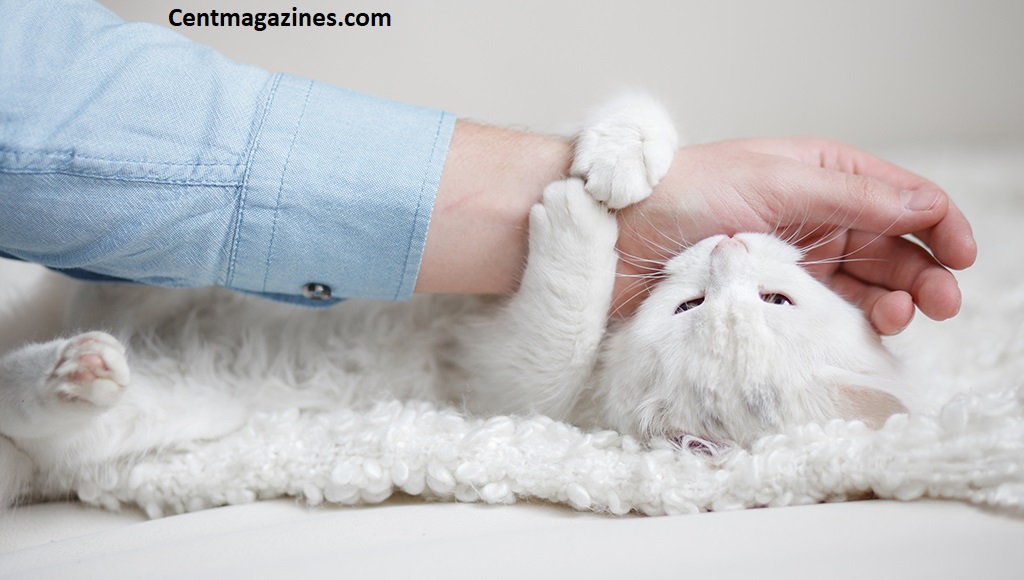
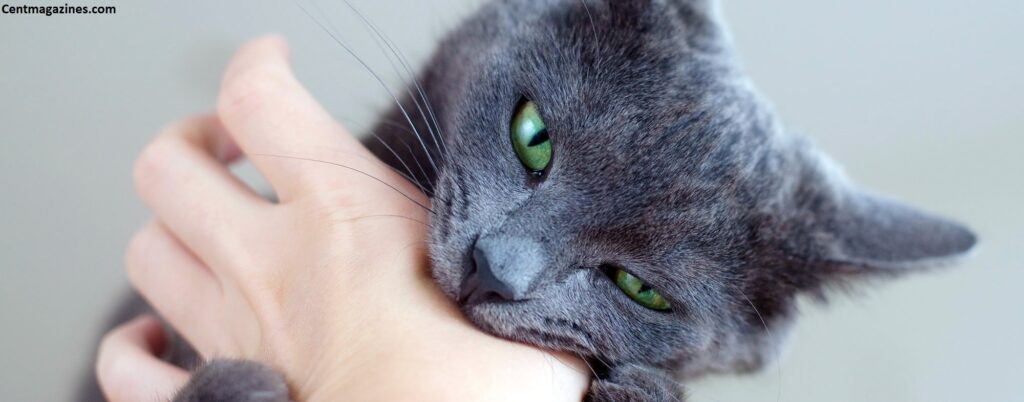
Why Do Cats Bite When You Pet Them? Cats bite during petting due to a phenomenon called petting-induced aggression.
Even when enjoying affection, cats have a stimulation threshold — once overstimulated, they bite as a signal to stop.
Watch for warning signs like tail flicking, skin rippling, flattened ears, or dilated pupils before the bite occurs.
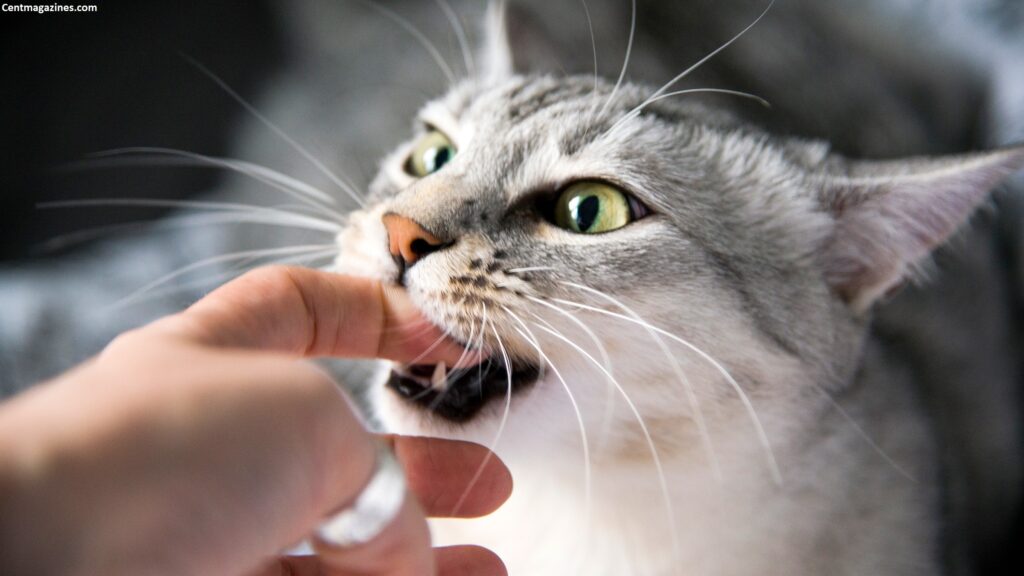
Some cats bite out of redirected playfulness, treating your hand like a toy. Others may bite sensitive or painful areas, signaling underlying discomfort.
Certain spots — like the belly or base of the tail — are naturally more sensitive. Learning your cat’s personal limits prevents bites and builds a stronger, more trusting bond.
Table of Contents
Quick Table
| # | Cause | Warning signs | What to do | Category |
|---|---|---|---|---|
| 1 | Petting-induced overstimulation | Tail flicking, skin rippling, tense body | Stop petting immediately and give the cat space | Behavior |
| 2 | Redirected play aggression | Dilated pupils, crouching, wiggling rear | Redirect to a toy instead of using your hand | Instinct |
| 3 | Sensitive body areas | Flinching, swatting when belly or tail touched | Stick to safe zones — head, chin, and cheeks | Physical |
| 4 | Underlying pain or illness | Biting at spots never bothered before | Visit a vet to rule out injury or health issues | Physical |
| 5 | Love bites | Gentle nibble with no hissing or aggression | Recognize as affection — no action needed | Social |
| 6 | Lack of early socialization | Skittish, unpredictable reactions to touch | Use slow, patient desensitization techniques | Behavior |
| 7 | Fear or anxiety | Flattened ears, wide eyes, crouched posture | Create a calm environment; never force contact | Behavior |
| 8 | Territorial response | Biting during specific times or in certain spots | Respect the cat’s personal space boundaries | Instinct |
| 9 | Attention-seeking bite | Soft bite followed by staring or nudging | Engage with play or feeding on a regular schedule | Social |
| 10 | Static electricity | Sudden bite with no other warning signs | Use a humidifier or anti-static grooming tools | Physical |
Why Do Cats Bite When You Pet Them?
Cats bite during petting due to a phenomenon called petting-induced aggression. Even when enjoying affection, cats have a stimulation threshold — once overstimulated, they bite as a signal to stop.
Watch for warning signs like tail flicking, skin rippling, flattened ears, or dilated pupils before the bite occurs. Some cats bite out of redirected playfulness, treating your hand like a toy.
Others may bite sensitive or painful areas, signaling underlying discomfort. Certain spots — like the belly or base of the tail — are naturally more sensitive.
Learning your cat’s personal limits prevents bites and builds a stronger, more trusting bond.
Is This Normal for Your Cat?
Before jumping to conclusions, it’s worth asking: has your cat always been chatty, or did this start recently? That distinction matters a lot.
Some breeds are just naturally vocal — Siamese cats, for instance, are notorious for carrying on full conversations.
If you have one and you’re surprised they’re loud, I hate to break it to you, but that ship has sailed. That’s just who they are.
Same with Bengals, Burmese, and Orientals. These cats were basically bred to communicate with people.
But if your normally quiet cat suddenly becomes a chatterbox out of nowhere, that’s a different situation entirely and worth paying closer attention to.
Hunger or routine
Most vocal cats are just telling you it’s dinner time — on their schedule, not yours.
Loneliness
Cats left alone for long hours often compensate by vocalizing more when you return.
In heat
Unspayed females and unneutered males can be relentlessly loud during mating cycles.
Health issue
Pain, hyperthyroidism, or cognitive decline in older cats can trigger sudden vocalizing.
Age-related confusion
Senior cats sometimes vocalize at night due to disorientation — similar to sundowning.
Stress or anxiety
A new pet, move, or change in schedule can make a cat louder as they try to cope.
The Most Common Reason (And Yes, I Fell for It Too)
Let me be honest about the mistake I made with Mango. The night he first started howling outside my door, I went out, filled his food bowl, and he immediately quieted down. Victory, right?
Wrong. That was the worst thing I could have done.
Within a week, he had learned a very effective equation: howl = food appears. I had accidentally trained him to be loud.
This is by far the most common reason cats become increasingly vocal — owners accidentally reward the behavior by responding to it.
The single biggest mistake I see cat owners make is giving in when a cat vocalizes.
You respond once, they learn it works, and suddenly you’ve got a cat that treats meowing like a car alarm that eventually gets attended to.
If your cat has learned this pattern, you’ll need to do what behaviorists call extinction — which basically means consistently not rewarding the behavior.
It’s brutal for about a week, but it works. Set scheduled feeding times and stick to them. Don’t acknowledge the yelling. Only feed when they’re quiet. It takes patience, but the change is real.
When It’s Actually a Medical Issue
This is the part I really want you to pay attention to, because I almost missed it with an older cat I had before Mango.
My previous cat, a 12-year-old tabby named Biscuit, started meowing a lot more in her senior years. I assumed it was just an old cat thing — maybe she was confused or wanted more attention.
Turns out she had hyperthyroidism, which is really common in cats over 10.
It causes restlessness, increased appetite, and yes, a lot of extra vocalizing.
Once she was on medication, she calmed down noticeably. I felt genuinely terrible for assuming it was behavioral when she’d actually been uncomfortable for a while.
So: if your cat is over 8 years old and has started being louder than usual, please get a blood panel done. It’s not expensive and it rules out the most common culprits quickly.
Hyperthyroidism, kidney disease, high blood pressure, and even early cognitive dysfunction can all show up as increased vocalization.
Watch for this
If the meowing sounds different — more urgent, more pained, more disoriented — don’t wait. That’s the kind of change that warrants a vet call sooner rather than later.
The Step-by-Step Approach I Now Use
After going through this with two cats and talking to a couple of vets about it, here’s the process I actually follow when a cat becomes unusually vocal:
- Log when it’s happening. Is it only at night? Right before meals? After you leave for work? The timing usually gives away the cause. I literally kept a note on my phone for a few days — it helped a lot.
- Rule out hunger and routine first. Switch to a consistent feeding schedule with a measured portion. Automatic feeders like the PetSafe Smart Feed (the app-connected one) are great for this — takes the “begging for food” variable completely off the table.
- Check their environment. Has anything changed recently? New pet, new person, moved furniture, new work schedule? Cats hate change and will tell you about it loudly.
- Assess their age and overall health. If your cat is over 7-8 years old, get a senior wellness checkup if you haven’t recently. Ask specifically about thyroid levels and kidney function.
- Look at enrichment. A bored cat is a loud cat. Puzzle feeders, a window perch with a bird feeder outside, or even just 10-15 minutes of active play with a wand toy before bed can dramatically reduce nighttime vocalizing.
- Stop rewarding the noise. If everything checks out and it’s behavioral, this is the hardest but most important step. Don’t go to them when they cry. Don’t yell back (they take that as engagement). Wait for a quiet moment, then give attention.
The Breed Factor (Some Cats Are Just Wired This Way)
I want to give a shoutout to anyone who adopted a Siamese or a Maine Coon thinking “cats are chill and quiet” — the look on your face must have been something.
Some cats are genetically predisposed to being vocal. Siamese, Oriental Shorthairs, Burmese, and Bengals tend to have a lot to say all the time. This isn’t a problem to fix — it’s their personality.
If you live with one of these breeds, managing vocalization is about giving them enough social interaction and mental stimulation, not trying to turn them into a silent cat. That’s a losing battle.
What actually helps with breed-specific vocalization is more playtime, more conversation back (yes, really — they respond to being “talked to”), and making sure they’re not bored out of their minds while you’re away.
What actually worked for me
Leaving a nature documentary or “cat TV” YouTube channel on a low-volume tablet while I’m out of the house cut Mango’s evening vocalizing by probably half.
Sounds silly, but something about having background sounds and visuals keeps him occupied.
The Stress and Anxiety Angle
Cats are creatures of habit. Like, deeply, fundamentally creatures of habit.
Even small changes that seem totally minor to us — rearranging furniture, having a guest stay over, switching their litter brand — can genuinely stress them out.
When I moved to a new apartment with Mango, he was inconsolable for about two weeks.
He’d wander the new place meowing like he’d lost something, which I guess he had — his whole familiar environment.
What helped was setting up his things (bed, litter box, food station) in similar positions relative to each other as before, and spending extra time with him in the evenings while he adjusted.
Pheromone diffusers like Feliway are worth mentioning here. I was skeptical but a vet tech recommended one during the move and it genuinely seemed to take the edge off.
They plug into the wall like an air freshener and release synthetic calming pheromones. Not a magic fix but a useful tool in the toolkit.
Common Mistakes to Avoid
- Responding immediately every time they meow. This reinforces the behavior faster than anything else.
- Assuming it’s all behavioral without ruling out medical causes first. Especially important for cats over 7.
- Punishing the vocalization. Spraying with water, yelling, or making loud noises back increases anxiety and can make things worse.
- Ignoring a sudden change in vocalization in an older cat. New + sudden = vet visit. Always.
- Thinking more food will solve it. Overfeeding to quiet a cat creates a whole other set of health problems and still doesn’t address the root cause.
- Giving up too early on behavioral training. Extinction takes 1-2 weeks of consistency. Most people give in on day 3 and reset the clock completely.
One More Thing About Night Yowling Specifically
Night yowling deserves its own mention because it’s the one that really breaks people. You’re exhausted, it’s 3am, and your cat sounds like they’re auditioning for a horror movie.
The most effective thing I found was a solid playtime session — not just a few minutes, but a real 20-minute play session — right before bed. Get them actually tired.
Then feed them immediately after (mimicking the hunt-catch-eat-groom-sleep cycle that cats are naturally wired for). By the time they’ve eaten and groomed, they’re usually ready to sleep.
This approach is popularized by cat behaviorist Jackson Galaxy and it genuinely works. The sequence matters: play, then eat, then sleep.
A lot of night yowling comes from cats who aren’t tired and aren’t in the right hormonal state to settle down
FAQ’s
Why does my cat bite me when I pet him even though he purrs?
Purring does not always mean a cat is fully comfortable. Cats can purr while becoming overstimulated, and a sudden bite is their way of saying they have reached their limit. Watch for physical warning signs like tail flicking or skin rippling alongside the purring to catch the signal before the bite happens.
What is petting-induced aggression in cats?
Petting-induced aggression is a well-documented feline behavior where a cat tolerates and even enjoys touch up to a certain point, then bites without much visible warning. It happens because repetitive physical contact overstimulates a cat’s nervous system, triggering a defensive response. Learning your individual cat’s threshold is the most effective way to prevent it.
Where should you never pet a cat?
The belly, base of the tail, and legs are the most sensitive areas for most cats and are common bite triggers. The safest petting zones are the head, chin, cheeks, and behind the ears. Always let your cat guide the interaction rather than assuming all areas are welcome.
Are cat bites during petting a sign of aggression?
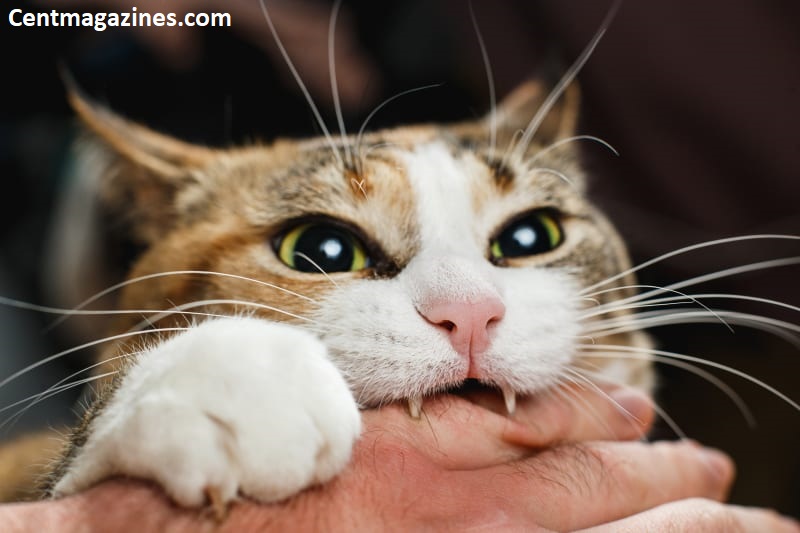
Not always. There is an important difference between love bites and true aggression. Love bites are gentle, painless nibbles that carry no hissing, growling, or hostile body language. True aggression involves hard bites, scratching, flattened ears, and an overall defensive posture. Understanding the difference helps you respond appropriately to each situation.
How do I stop my cat from biting me when I pet her?
The most effective approach is learning your cat’s personal warning signs and stopping before the threshold is reached. Keep petting sessions short, focus on preferred zones like the head and chin, never use your hands as play toys, and reward calm behavior with treats. Consistency and patience are key to building a bite-free bond.
Conclusion
Understanding why cats bite when you pet them is one of the most valuable things any cat owner can learn.
What often feels like random or ungrateful behavior is actually a precise and meaningful form of communication.
Your cat is not being mean — they are simply telling you something important in the only language they know.
Petting-induced aggression, overstimulation, sensitive body zones, redirected play, and underlying pain all play a role in why cats bite during what should be a peaceful moment.
Each cause has clear warning signs and straightforward solutions, meaning this is a problem that every cat owner can genuinely improve with the right knowledge and a little patience.
The relationship between a cat and their owner thrives on mutual respect.
When you learn to read your cat’s body language — the tail flick, the rippling skin, the shifting ears — you gain a communication advantage that prevents bites before they ever happen.
Your cat will feel safer, more understood, and more willing to enjoy affection on their own terms.
A cat that trusts you will come to you. Give them the space, the boundaries, and the patience they need, and the bond you build will be deeper, warmer, and completely bite-free.