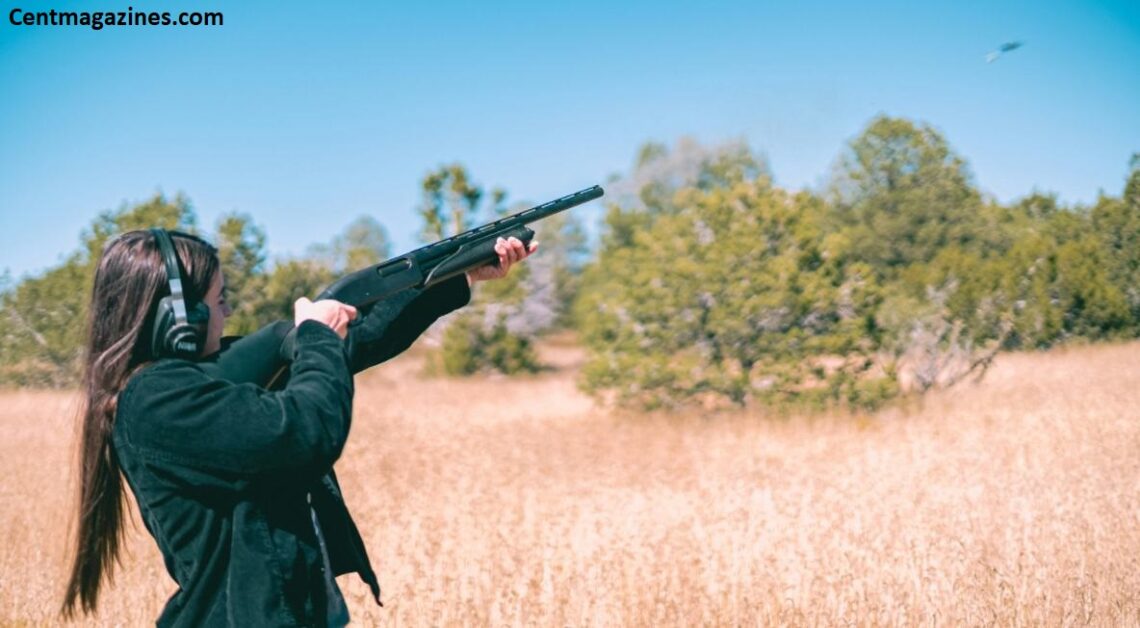
Why Do Hunters Pattern Their Shotguns? Hunters pattern their shotguns to know exactly how their gun shoots before stepping into the field.
Patterning means firing at a target and studying how the pellets spread, revealing whether the pattern is tight, wide, centered, or off to one side.
Every shotgun performs differently depending on the choke, ammunition brand, and shot size used. Without patterning, a hunter is simply guessing.
That guess can mean a clean miss or, worse, a wounded animal.
By patterning their shotgun, hunters find the best choke and ammo combination for their specific gun — maximizing accuracy, range, and ethical hunting results.
Table of Contents
Quick Table
| Reason | What it reveals | Benefit | Importance |
|---|---|---|---|
| Find pellet spread | How wide or tight the shot pattern is at a given distance | Choose the right choke for your game | Critical |
| Test ammo combinations | Which brand and shot size performs best in your gun | Avoid wasted shots and missed targets | Critical |
| Check point of impact | Whether the pattern is centered, high, low, or off-side | Correct aim before hunting season | Critical |
| Determine effective range | Maximum distance with a lethal, consistent pattern | Know when not to take a shot | Important |
| Match choke to game | Tighter choke for long shots, looser for close-up work | Better performance per hunting scenario | Important |
| Ethical hunting | Confirms clean, humane kill zone coverage | Reduces risk of wounding animals | Critical |
| Build confidence | Shooter knows exactly what their gun will do | Better decision-making in the field | Helpful |
Why Do Hunters Pattern Their Shotguns?
I still remember the look on my uncle’s face the first time I missed a straightaway pheasant at maybe 25 yards. Clean miss. Bird kept flying like I wasn’t even there.
He didn’t say anything — just watched the rooster disappear into the cattails — and then slowly turned to me and said, “You ever actually pattern that thing?”
I hadn’t. I’d shot the gun before, hit some clays, thought I knew where it shot. Turns out I had no idea.
That embarrassing morning was the start of a real education in shotgun patterning — and honestly, it changed how I hunt more than any other single thing I’ve done.
So What Does “Patterning” Actually Mean?
If you’ve never done it, patterning is pretty simple in concept: you shoot at a large paper target — usually a 30-inch circle — from a set distance (typically 40 yards), and then look at where all those pellets actually landed.
That’s it. But what you see when you walk up to that paper is often genuinely surprising.
You’re checking a few things. Where is the center of the pattern? Is it where you aimed, or is it shooting high, low, left, or right? How evenly are those pellets distributed?
Are there big holes a bird could fly through untouched? And how many pellets actually hit the target at all — meaning, how dense is your pattern at real-world hunting distances?
“Your shotgun isn’t a laser. It throws a cloud of pellets — and that cloud behaves differently depending on choke, shell, and distance.”
Most hunters assume their shotgun shoots where they point it, and that the choke they screwed in is doing what it says on the tube. Both assumptions can be completely wrong.
The Real Reasons Hunters Do It
Every gun-and-shell combination is different
This one surprised me the most. I’d assumed my gun would pattern similarly with any #5 lead load I threw through it. Nope.
I ran an experiment one fall afternoon with three different 12-gauge shells — a Winchester Super-X, a Federal Premium Wing-Shok, and a cheap store-brand load — all through the same Modified choke at 40 yards.
The patterns were noticeably different. One threw tight and consistent. One had a weaker right side. One printed high by almost four inches.
Same gun. Same choke. Different shells. That’s why you have to pattern your specific setup, not just assume.
Choke markings aren’t gospel
You might have a choke tube that says “Improved Modified” on it, but whether it actually throws an improved-modified pattern depends on your barrel, your shell, and the choke’s actual constriction — which can vary slightly between manufacturers.
I’ve tested “Full” chokes that threw wider patterns than an “Improved Cylinder” in a buddy’s gun. The label is a starting point, not a guarantee.
Point of impact can be way off
Shotguns aren’t like rifles where you’re shooting a single projectile you can dial in. But they do have a point of impact — and factory guns, especially pump actions and semi-autos, can shoot higher or lower than where you’re looking.
Many upland guns are deliberately built to shoot slightly high (like 60/40) so you can see a rising bird without covering it. But some guns shoot 50/50 or even low, which means you’d need to swing differently to break birds cleanly.
Knowing this changes how you mount and swing your gun. It’s subtle, but over a full season of hunting, it matters a lot.
Pro tip
Draw a 30-inch circle on your pattern paper before you shoot. After the shot, count pellet holes inside and outside the circle. You want at least 70% of pellets inside for a hunting-worthy pattern at your target distance.
To find the right choke for the game you’re hunting
Choke selection is one of the most argued topics in bird hunting circles, and for good reason. There’s no single right answer — it depends on how you hunt.
If you’re hunting early-season grouse in thick aspen that flush at 15 yards, a Full choke will put a fist-sized hole through a bird and you’ll still miss half the time because the pattern is too tight for that range.
A Cylinder or Skeet choke opens things up and gives you a forgiving cloud at close quarters.
Late-season pheasants flushing at 40-plus yards? That’s where tighter chokes and heavier shot earn their keep.
Patterning lets you verify that the choke you chose actually performs the way you expect it to at the distances you’re shooting.
Steel and non-toxic shot patterns differently than lead
If you’re hunting waterfowl — which requires non-toxic shot — this is critical. Steel shot behaves completely differently than lead. It’s harder, doesn’t deform on setback, and patterns tighter than lead through the same choke.
Running a Full choke with steel can actually damage your barrel or at minimum destroy your pattern (and possibly your gun).
Most waterfowl hunters drop down one choke size when switching to steel — Modified instead of Full, IC instead of Modified — but patterning will confirm what actually works with your specific steel load.
I learned this one from a goose hunting trip where my buddy’s pattern looked like confetti thrown at the wind. He was running a tight aftermarket choke with cheap steel loads. Never again.
How to Actually Pattern Your Shotgun
Here’s the basic process — nothing fancy required:
- Get large paper. Newsprint rolls or cheap butcher paper work great. You want at least a 36×36 inch sheet. Draw a 30-inch circle and mark a distinct aiming point in the center.
- Set your distance. For upland birds, 40 yards is the standard. For close-flushing birds or home defense, you might pattern at 15 or 25 yards too.
- Use a rest, not a bag. Prop the gun on a solid rest and focus on your cheek weld and natural point of aim. You want the gun to be consistent, not your hold.
- Fire one round, then walk up and look. Don’t shoot multiple times first — you want to assess each pattern individually.
- Count and analyze. Count the hits inside that 30-inch circle. Note where the center of the pattern falls relative to your aim point. Look for gaps or thin spots.
- Repeat at least 3 times. One shot is anecdotal. Three or more shots gives you a real picture of what your gun is doing consistently.
- Try different shells and chokes. This is the part that actually tells you something. Swap one variable at a time.
What to bring to the range
Large paper or cardboard, a marker, measuring tape, a staple gun or tape, several boxes of your hunting loads, and a couple different choke tubes. An hour of your time before season opens is worth more than any gear upgrade.
Mistakes Hunters Make When Patterning
Only shooting at one distance. If you hunt close-cover grouse AND open-field pheasants in the same season, your 40-yard pattern data doesn’t tell you much about what’s happening at 20 yards. Pattern at multiple distances.
Patterning from the bench only. Your bench position might be perfect — but do you shoot from a bench in the field? Standing shots, shooting over a fence, awkward angles from a blind — your hold changes. The bench pattern is your baseline, not the whole story.
Using range ammo instead of hunting loads. If you’re going hunting with 3-inch Federal Heavyweight #6, pattern with 3-inch Federal Heavyweight #6. Not the cheapest target load you could find for practice.
Ignoring the pattern center. Most hunters count pellets and call it done. But if your pattern center is printing three inches high and two inches left, that information changes how you aim. A lot of hunters have shot hundreds of birds with a slightly off gun and never known it.
Patterning once and never again. Choke tubes wear. Barrels can develop fouling build-up. Hunting loads change between years. Make patterning an annual pre-season habit, not a one-time event.
What Good Looks Like
At 40 yards through a Modified choke with a quality lead hunting load, you’re looking for something like 70% or better pellet coverage inside that 30-inch circle, with reasonably even distribution — no obvious holes bigger than 3-4 inches that a bird’s vitals could slip through.
For close-range upland work with an IC or Skeet choke at 20-25 yards, your pattern will be wider and that’s exactly what you want — a forgiving spread that doesn’t require surgical precision on a fast-flushing bird.
There’s no single “perfect” pattern. It depends entirely on how and where you hunt.
The Bigger Picture
Patterning isn’t just a technical exercise. It builds confidence. When you walk into the field and you know your gun, your load, and your choke are dialed in for the conditions you’re hunting, you shoot with a different kind of certainty.
That pheasant my uncle watched me miss?
I went back the next week, spent two hours at a gravel pit with a roll of butcher paper, and discovered my old Modified choke was throwing a pattern that was hitting nearly six inches low at 40 yards with the shells I was using.
No wonder I was missing — I was compensating all wrong without knowing it.
Swapped to a new choke tube, switched to a slightly faster load, and patterned until I had something consistent and centered. The next time I was in a pheasant field, I was a different hunter. Not a perfect one — but an informed one.
That’s really the whole point of patterning. Not to make your shotgun magic. Just to make sure what you’re trusting in the field is actually doing what you think it is.
Do it once, do it right, and go into your season knowing exactly what your gun can and can’t do. The birds are hard enough to find without also fighting your equipment.
FAQ’s
What does it mean to pattern a shotgun?
Patterning a shotgun means firing at a large paper target and studying how the pellets spread. It shows whether your pattern is centered, tight enough, or spread too wide for the game you’re hunting.
How far away should you pattern a shotgun?
Most hunters pattern at 40 yards, which is a common shooting distance in the field. Turkey hunters may test at 30–40 yards, while waterfowl hunters often pattern at 35 yards or more.
How often should hunters pattern their shotguns?
Pattern your shotgun at the start of every hunting season, whenever you switch ammunition brands, change your choke, or switch to a different type of game.
Does the choke really make that big a difference?
Yes. A tighter choke concentrates pellets for longer shots, while a more open choke spreads them wider for close-up targets. The wrong choke for the situation can mean a clean miss every time.
Can any hunter pattern a shotgun at home?
Yes. All you need is a large paper target, a safe backstop, and your chosen ammunition. It’s inexpensive, straightforward, and takes less than an hour to complete.
Conclusion
Patterning a shotgun is one of the most overlooked steps in hunting preparation — yet it’s one of the most important.
It costs very little time, requires no special equipment, and can completely transform your performance in the field.
When you pattern your shotgun, you stop guessing and start knowing. You know how your pellets spread at 40 yards. You know whether your pattern sits high or drifts left.
You know which choke and ammunition combination gives you the best chance of a clean, ethical shot on the animal you’re pursuing.
Every shotgun is different. Two hunters using the same model with the same shells can see completely different patterns downrange.
Variables like choke type, shot size, pellet material, and even barrel length all influence where and how your pellets land. The only way to truly understand your gun is to put it on paper.
Whether you’re heading out for turkey, waterfowl, pheasant, or dove, patterning your shotgun before the season is a habit worth building.
It builds confidence, improves accuracy, and — most importantly — ensures you’re hunting as ethically as possible.