
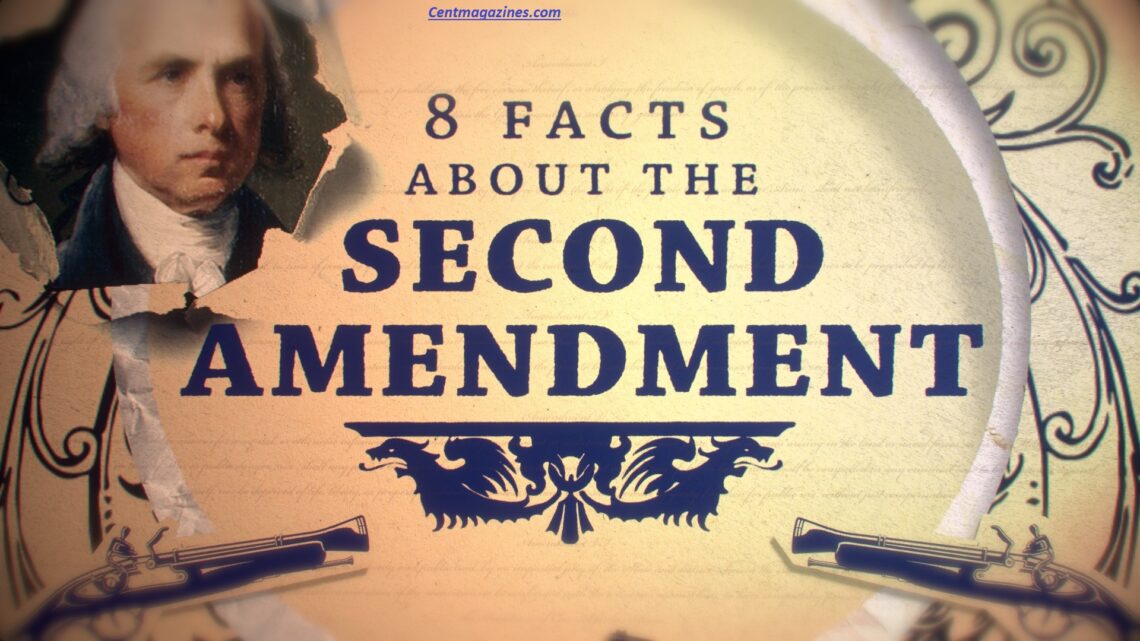
Why Was the Second Amendment Created? The Second Amendment was created to protect citizens’ ability to defend themselves and prevent government tyranny, shaped by experiences like the American Revolution.
Early Americans feared centralized power and preferred local militias over standing armies. Influenced by the English Bill of Rights, it ensured people could bear arms for security and resistance if needed.
Included in the United States Bill of Rights in 1791, it balanced individual rights with state defense, reflecting the founders’ goal of preserving liberty and preventing abuses of power.
Whether you are a constitutional scholar, a gun rights advocate, a policy researcher, a student, or simply a curious citizen, understanding why the Second Amendment was created is essential to engaging meaningfully in one of America’s most enduring debates.
This article provides a deeply researched, historically grounded, legally accurate, and politically balanced examination of:
- The events and fears that motivated the Founders
- The philosophical traditions they drew upon
- The specific language they chose — and why
- How courts and scholars have interpreted their intent
- What those original purposes mean in a 21st-century context
Let’s begin at the beginning.
Table of Contents
Quick Table
| Key Factor | Explanation | Historical Context | Why It Mattered |
|---|---|---|---|
| Protection from tyranny | Citizens needed the ability to defend themselves against oppressive government | Post-American Revolution fears of centralized power | Ensured a balance between citizens and government authority |
| Militia system | States relied on citizen militias instead of a large standing army | Early U.S. lacked resources for permanent military forces | Allowed rapid defense without risking dictatorship |
| Right to self-defense | Individuals wanted the ability to protect their lives and property | Frontier life was dangerous and law enforcement was limited | Provided personal security in unstable regions |
| Distrust of standing armies | Founders feared permanent armies could threaten liberty | Influenced by British military control before independence | Encouraged decentralized defense through armed citizens |
| Influence of English law | Inspired by the English Bill of Rights | Established precedent for limited right to bear arms | Shaped early American legal thinking |
| Federal vs state power | States wanted to maintain control over their own defense forces | Debates during drafting of the United States Constitution | Protected state authority within the federal system |
| Inclusion in the Bill of Rights | Added as part of the first ten amendments | Ratified in 1791 as part of the United States Bill of Rights | Guaranteed individual liberties and reassured citizens |
This table summarizes the core reasons behind the creation of the Second Amendment, highlighting its roots in historical experience, political philosophy, and practical defense needs.
What Is the Second Amendment?
The Second Amendment is the second article of the Bill of Rights, a collection of the first ten amendments to the United States Constitution, ratified on December 15, 1791.
Full Text
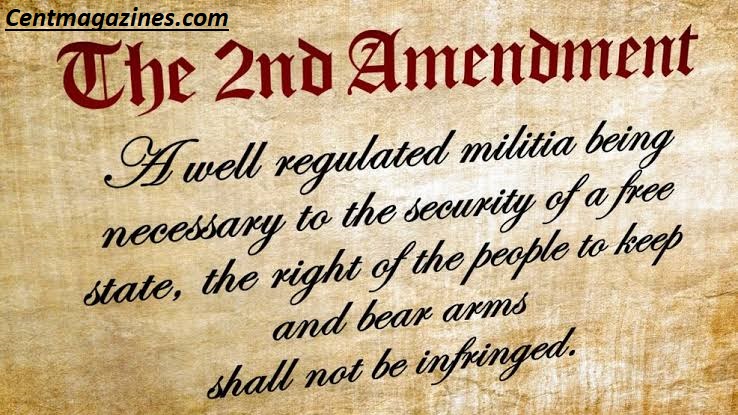
“A well regulated Militia, being necessary to the security of a free State, the right of the people to keep and bear Arms, shall not be infringed.”
Key Structural Elements
| Element | Text | Meaning |
|---|---|---|
| Prefatory Clause | “A well regulated Militia, being necessary to the security of a free State” | States the civic justification |
| Operative Clause | “the right of the people to keep and bear Arms, shall not be infringed” | Grants the actual right |
The tension between these two clauses — whether the prefatory clause limits the operative clause or merely explains it — has been the source of over two centuries of legal, political, and scholarly debate.
The Historical Context Colonial America and British Rule
To understand why the Second Amendment was created, you must first understand the world the Founders lived in.
Life Under British Rule
From the early 1600s through the American Revolution (1775–1783), the American colonies were subject to British governance. Over time, colonists grew increasingly resentful of:
- Taxation without representation in Parliament
- Quartering Acts, which forced colonists to house British soldiers
- General warrants that allowed soldiers to search homes without cause
- Attempts to disarm colonists, particularly in Massachusetts in 1774–1775
The final breaking point came in April 1775, when British General Thomas Gage dispatched troops to Lexington and Concord, Massachusetts — specifically to seize and destroy colonial arms and ammunition stored by local militias.
This act of disarmament was, to the colonists, proof that an unarmed population was a vulnerable population.
The Experience of Standing Armies
British soldiers — a professional standing army — had occupied American cities. To colonists raised on English Whig political philosophy, standing armies were instruments of tyranny.
History had shown them: Oliver Cromwell’s rule, the English Civil War, and the Glorious Revolution of 1688 all demonstrated that professional armies could be turned against the people.
The solution the Founders trusted was not a standing army — it was an armed citizenry organized into local militias.
The Militia Tradition in Colonial America
Colonial militias existed in every colony long before the Revolution. These were:
- Locally organized bands of ordinary citizens
- Self-armed — each militiaman was expected to own his own firearm
- Activated for emergencies such as Native American conflicts, frontier defense, or external invasion
- Separate from any centralized command structure
This tradition of civilian armed defense was not just practical — it was ideological. The armed citizen-soldier was a symbol of republican virtue and civic responsibility.
Why Was the Second Amendment Created? The 7 Core Reasons
Historians, constitutional scholars, and legal experts have identified multiple, overlapping reasons why the Founders included the right to bear arms in the Bill of Rights.
Protection Against Government Tyranny
The most commonly cited reason is the fear of tyrannical government.
The Founders had just fought a war against what they considered an oppressive government. They were deeply concerned that the new federal government — especially given the broad powers granted by the Constitution — could become similarly tyrannical.
An armed citizenry, they believed, served as the ultimate check on governmental overreach. If the government turned against the people, citizens would have the means to resist.
Key Founder Quote:
“What country can preserve its liberties if their rulers are not warned from time to time that their people preserve the spirit of resistance?” — Thomas Jefferson, 1787
The Need for Citizen Militias as a National Defense
The Founders were deeply suspicious of standing armies. In the Constitution, they gave Congress the power to raise armies — but they also built in a counterweight: the militia.
Article I, Section 8 of the Constitution gives Congress the power to call forth the militia. The Second Amendment reinforced the right of citizens to keep arms precisely so that militias could be assembled when needed, without depending on a permanent military force.
The logic: A country defended by its own armed citizens is less likely to fall to foreign invasion — and less likely to be subjugated by its own government.
Individual Self-Defense
Beyond collective defense, many Founders also recognized individual self-defense as a natural right.
Drawing on John Locke’s philosophy (which deeply influenced the Declaration of Independence), the Founders believed individuals had an inherent right to life — and that the right to defend that life was inseparable from it.
In District of Columbia v. Heller (2008), the Supreme Court explicitly confirmed that the Second Amendment protects an individual right to self-defense, not just a collective militia right.
Fear of Federal Overreach Over State Militias
Many of the Founders — especially Anti-Federalists like Patrick Henry and George Mason — feared the new federal government would disarm state militias and replace them with a federal standing army.
The Second Amendment was, in part, a compromise: a guarantee that the federal government could not strip citizens or states of the ability to maintain their own armed forces.
George Mason, one of the primary architects of the Bill of Rights, explicitly stated that disarming the people was the most effective way to enslave them.
Key Founder Quote:
“To disarm the people… was the best and most effectual way to enslave them.” — George Mason, Virginia Ratifying Convention, 1788
The British Disarmament Precedent
The attempt by British authorities to disarm Massachusetts colonists in 1774–1775 was fresh in every Founder’s mind.
The Suffolk Resolves (1774) explicitly called on colonists to arm themselves in response. The battles at Lexington and Concord were triggered by a British attempt to seize colonial arms.
This lived experience made it clear to the Founders: the first act of a tyrannical government is to disarm its citizens. The Second Amendment was a constitutional firewall against that scenario ever repeating.
The English Common Law Tradition
The Founders did not create the right to bear arms from nothing. They drew heavily on English common law, particularly:
- The English Bill of Rights (1689), which granted Protestants the right to have arms for their defense
- William Blackstone’s Commentaries on the Laws of England (1765–1769), which described the right to arms as one of the “absolute rights of individuals”
- The Magna Carta tradition of limiting government power through law
The Second Amendment was, in many ways, an Americanized and expanded version of rights already recognized in English legal tradition.Republican Political Philosophy and Civic Virtue
The Founders were deeply influenced by classical republican philosophy — particularly the writings of Cicero, Machiavelli, and Montesquieu — which held that an armed and virtuous citizenry was the foundation of a free republic.
The citizen-soldier — a man who owned his own farm, his own weapons, and stood ready to defend his community — was the ideal republican figure. Dependence on professional soldiers was seen as a sign of civic decay.
This philosophical tradition informed not just the Second Amendment, but the entire structure of early American governance.
Who Were the Key Founders Behind the Second Amendment?
James Madison — The Principal Drafter
James Madison drafted the original version of the Bill of Rights, including what became the Second Amendment. Madison was primarily motivated by the need to satisfy Anti-Federalist objections and secure ratification of the Constitution.
George Mason — The Ideological Force
George Mason of Virginia refused to sign the Constitution in part because it lacked a Bill of Rights. His earlier Virginia Declaration of Rights (1776) directly influenced the Second Amendment’s language and purpose.
Patrick Henry — The Anti-Federalist Voice
Patrick Henry (“Give me liberty, or give me death”) was one of the most vocal opponents of the Constitution without a Bill of Rights. He feared the federal government would destroy state militias.
Thomas Jefferson — The Philosophical Backbone
Though not present at the Constitutional Convention, Jefferson’s writings on natural rights, liberty, and resistance to tyranny deeply shaped the ideological framework behind the Second Amendment.
Roger Sherman and Other Federalists
Federalists like Roger Sherman were less enthusiastic about the Second Amendment but accepted it as a political necessity to achieve ratification.
The Role of Militias vs. Standing Armies
One of the most important — and most debated — aspects of the Second Amendment’s origins is the militia question.
What Was a Militia in 1791?
In the Founding era, a “militia” was not a formal military organization. It was:
- All able-bodied male citizens (typically 18–45)
- Who were expected to arm themselves at their own expense
- Who could be called upon in emergencies by state or federal authorities
- Who were NOT professional soldiers
The Militia Acts of 1792 formally defined the militia as all free, able-bodied white male citizens between 18 and 45 — and required each to own a musket, bayonet, and ammunition.
The Founders’ Fear of Standing Armies
| Standing Army | Citizen Militia |
|---|---|
| Professional, permanent soldiers | Part-time citizen-soldiers |
| Loyal to government/commander | Loyal to community/state |
| Expensive, requires taxation | Self-armed, self-organized |
| Historical tool of tyranny | Symbol of republican liberty |
| Potentially used against citizens | Defense OF citizens |
The Founders’ preference for militias over standing armies was not just philosophical — it was based on the historical record of professional armies being used against civilian populations.
The Decline of the Militia System
By the mid-19th century, the citizen militia system had largely collapsed. The U.S. Army became the primary national defense force. This shift fundamentally changed the practical context of the Second Amendment — though not, many argue, its legal meaning.
The English Bill of Rights and Its Influence
The English Bill of Rights of 1689 is one of the most direct precursors to the Second Amendment.
After the Glorious Revolution removed Catholic King James II and installed Protestant monarchs William and Mary, Parliament enumerated a list of rights — including:
“That the subjects which are Protestants may have arms for their defence suitable to their conditions and as allowed by law.”
Key Similarities and Differences
| Feature | English Bill of Rights (1689) | Second Amendment (1791) |
|---|---|---|
| Religious qualifier | Protestants only | All people |
| Subject to law | “as allowed by law” | “shall not be infringed” |
| Purpose | Personal defense | Defense + militia |
| Scope | Subjects of the Crown | Citizens of a Republic |
The American Founders took the English framework and radicalized it — removing religious and class qualifications and making the right explicitly immune to legislative infringement.
The Second Amendment and Slavery: A Controversial Historical Lens
Some historians, most notably Carol Anderson (The Second: Race and Guns in a Fatally Unequal America, 2021) and Carl T. Bogus, have argued that the Second Amendment was also shaped — at least in part — by the need to protect Southern slave states’ ability to maintain slave patrols.
The Argument
- Southern states relied on armed citizen patrols to police enslaved populations
- Founders like James Madison needed Southern support for the Constitution
- Guaranteeing the right to bear arms ensured Southern states could maintain these armed forces without federal interference
The Counterargument
- Most constitutional historians emphasize the militia-vs.-standing-army debate as the primary motivation
- The slave patrol theory is supported by some evidence but disputed by mainstream constitutional historians
- The text of the Second Amendment does not reference slavery
Why It Matters
This debate illustrates that the Second Amendment’s origins are not monolithic. Like most constitutional provisions, it emerged from a complex set of political compromises, fears, and interests — not a single, pure philosophical purpose
What the Founding Fathers Said Key Quotes
| Founder | Quote | Context |
|---|---|---|
| George Mason | “To disarm the people… [is] the best and most effectual way to enslave them.” | Virginia Ratifying Convention, 1788 |
| James Madison | “The ultimate authority… resides in the people alone.” | Federalist No. 46 |
| Thomas Jefferson | “The strongest reason for the people to retain the right to keep and bear arms is, as a last resort, to protect themselves against tyranny in government.” | Often attributed; provenance debated |
| Patrick Henry | “The great object is that every man be armed… Everyone who is able may have a gun.” | Virginia Ratifying Convention, 1788 |
| Alexander Hamilton | “If circumstances should at any time oblige the government to form an army… that army can never be formidable to the liberties of the people while there is a large body of citizens… who stand ready to defend their own rights.” | Federalist No. 29 |
| Noah Webster | “Before a standing army can rule, the people must be disarmed.” | An Examination of the Constitution, 1787 |
How the Second Amendment Has Been Interpreted Over Time
The meaning of the Second Amendment has not been static. It has evolved through judicial interpretation, political change, and shifting social contexts.
The Collective Rights Era (19th Century–Early 20th Century)
For most of American history, courts interpreted the Second Amendment as protecting a collective right — the right of states to maintain militias — rather than an individual right to own firearms.
Key case: United States v. Miller (1939) — The Supreme Court upheld federal restrictions on sawed-off shotguns, ruling the Second Amendment was tied to militia service.
The Individual Rights Debate (1970s–2008)
Beginning in the 1970s, gun rights advocates and legal scholars began arguing forcefully for an individual rights interpretation. This view held that “the right of the people” meant individual Americans, regardless of militia membership.
Key scholars: Robert Bork, Joyce Lee Malcolm, Sanford Levinson, Laurence Tribe (who changed his view).
The Individual Rights Era (2008–Present)
District of Columbia v. Heller (2008) was a landmark ruling. The Supreme Court held, 5–4, that:
- The Second Amendment protects an individual right to possess firearms
- This right exists independent of militia service
- The government can impose some regulations, but cannot ban handguns in the home
McDonald v. City of Chicago (2010) extended this ruling to state and local governments via the 14th Amendment.
New York State Rifle & Pistol Association v. Bruen (2022) further expanded Second Amendment protections, requiring gun regulations to be rooted in the historical tradition of American firearms regulation.
Landmark Supreme Court Cases
| Case | Year | Ruling | Significance |
|---|---|---|---|
| United States v. Cruikshank | 1876 | 2A doesn’t apply to private actors | Limited federal protection |
| Presser v. Illinois | 1886 | States can regulate armed groups | Militia regulation upheld |
| United States v. Miller | 1939 | Tied 2A to militia service | Collective rights era |
| District of Columbia v. Heller | 2008 | Individual right affirmed | Most important 2A ruling |
| McDonald v. City of Chicago | 2010 | Applied to states via 14A | Nationalized Heller |
| NYSRPA v. Bruen | 2022 | Historical test for regulations | Expanded gun rights |
The Second Amendment vs. Gun Control Then and Now
What the Founders Did Regulate
Contrary to some popular narratives, the Founders were not opposed to all gun regulation. Historical evidence shows:
- Many states required gun registration
- Guns were inspected and stored in town armories
- Mentally ill and dangerous individuals were sometimes disarmed
- Carrying concealed weapons was widely restricted
The Founders’ vision was not of unregulated individual armament — it was of a well-regulated (i.e., disciplined, organized, equipped) militia.
The Modern Debate
Today’s gun control debate is shaped by two competing readings of the Second Amendment’s original purpose:
Gun rights advocates argue:
- The right is individual and fundamental
- Any restriction must meet strict scrutiny
- The Founders intended it as a check on government tyranny
- Modern firearms are the equivalent of colonial muskets
Gun regulation advocates argue:
- The prefatory clause shows a militia-focused intent
- The Founders accepted reasonable regulation
- Modern weapons (semi-automatic, high-capacity) were not contemplated in 1791
- Public safety is a legitimate state interest that can limit the right
Both sides claim fidelity to the Founders’ original intent — which illustrates just how politically complex that original purpose was.
Common Misconceptions About Why the Second Amendment Was Created
“It was purely about hunting”
Reality: The Founders almost never mentioned hunting as a purpose. Hunting was simply assumed as a part of rural life. The Amendment was about militia defense and resistance to tyranny.
“The Founders wanted everyone to have any weapon”
Reality: The Founders accepted significant regulation of arms. The concept of a “well regulated” militia implied organized, disciplined, accountable armed forces — not unregulated individual arsenals.
“It was only about militias, not individuals”
Reality: The Supreme Court in Heller (2008) settled this: the right is individual. But the historical context does show the Founders’ primary concern was collective, civic defense.
“The Founders never envisioned modern weapons”
Reality: This is a policy argument, not a historical one. The Founders did envision technological change — but whether that affects constitutional interpretation is a matter of ongoing legal debate.
“The Second Amendment is absolute”
Reality: Even Heller explicitly stated the right is “not unlimited.” The Founders themselves regulated arms. No constitutional right is absolute.
Second Amendment Rights Across U.S. States Regional Variations
While the Second Amendment is a federal constitutional right, how it is exercised varies significantly by state.
Constitutional Carry States (No Permit Required)
As of 2024, approximately 27 states allow permitless carry of concealed firearms. These include:
- Texas, Florida, Georgia, Tennessee, Montana, Arizona, and others
- These states interpret the Second Amendment most expansively
States with Stricter Regulations
States like California, New York, Illinois, Massachusetts, and Hawaii have enacted:
- Assault weapons bans
- High-capacity magazine restrictions
- Red flag laws (Extreme Risk Protection Orders)
- Universal background check requirements
- Waiting periods
Local vs. State vs. Federal
Since McDonald v. Chicago (2010), states cannot ban firearms outright. But they can regulate:
- Where you can carry (schools, government buildings, bars)
- What types of firearms are permitted
- Who can purchase (age, background check)
- How firearms must be stored
Regional Perspectives on Original Intent
Interpretations of why the Second Amendment was created also vary regionally:
- Rural/Southern/Western states tend to emphasize individual rights, self-defense, and resistance to tyranny
- Urban/Northeastern states tend to emphasize the militia-focused, collective-defense reading and the need to modernize the Amendment’s application
Entity Glossary
| Term | Definition |
|---|---|
| Second Amendment | Article II of the U.S. Bill of Rights, guaranteeing the right to keep and bear arms |
| Bill of Rights | The first ten amendments to the U.S. Constitution, ratified 1791 |
| Militia | A civilian military force, especially as distinguished from a professional army |
| Standing Army | A permanent, professional military force maintained in peacetime |
| Anti-Federalists | Opponents of the proposed Constitution who demanded a Bill of Rights as a condition of ratification |
| Federalists | Supporters of the Constitution and a strong central government |
| Original Intent | A method of constitutional interpretation focusing on the Founders’ intended meaning |
| Prefatory Clause | The introductory clause of the Second Amendment (“A well regulated Militia…”) |
| Operative Clause | The rights-granting clause of the Second Amendment (“…the right of the people…”) |
| Heller Decision | DC v. Heller (2008) — Supreme Court ruling affirming individual right to arms |
| Natural Rights | Rights held to exist independently of law, derived from nature or God; influenced by John Locke |
| English Bill of Rights (1689) | British document granting Protestants the right to bear arms for self-defense |
| Virginia Declaration of Rights | 1776 document by George Mason that influenced the Bill of Rights |
| Constitutional Carry | State laws permitting carrying of firearms without a government-issued permit |
| Red Flag Law | Law allowing courts to temporarily remove firearms from individuals deemed dangerous |
| Bruen Test | Standard from NYSRPA v. Bruen (2022) requiring gun laws to have historical precedent |
| Slave Patrols | Armed citizen groups in the antebellum South used to monitor and control enslaved people |
| Federalist Papers | Series of essays by Madison, Hamilton, and Jay advocating for the Constitution |
| Tyranny | Cruel, oppressive, or absolute government power |
| Civic Republicanism | Political philosophy emphasizing citizen participation and virtue in governance |
FAQ’s
What was the original purpose of the Second Amendment?
The original purpose of the Second Amendment was to protect the right of citizens to keep and bear arms for collective defense through state militias, as a check against federal tyranny, and as an expression of individual natural rights to self-defense. The Founders feared standing armies and wanted armed citizens as a counterweight to government power.
Did the Founding Fathers intend the Second Amendment to protect individual gun ownership?
Yes — though this was debated for centuries. The Supreme Court confirmed in District of Columbia v. Heller (2008) that the Second Amendment protects an individual right to own firearms for self-defense, independent of militia service. However, historians note that the Founders also had strong collective, civic-defense motivations.
Was the Second Amendment created because of the British?
Significantly, yes. The British attempt to disarm Massachusetts colonists at Lexington and Concord (1775) was a direct historical precedent that the Founders cited. They had experienced firsthand what it meant for a government to disarm its citizens — and they wrote the Second Amendment in part to ensure that could never happen in America.
Is the Second Amendment about militias or individual rights?
Both. The Supreme Court has ruled (in Heller, 2008) that it protects an individual right. But the text references militias, and the historical context shows the Founders were deeply concerned with maintaining armed citizen militias as an alternative to standing armies. The two purposes are intertwined, not mutually exclusive.
Did the Founders support any gun regulations?
Yes. The Founders supported a “well regulated” militia — meaning organized, trained, and disciplined. Historical records show early American governments required gun registration, inspected weapons, and restricted certain individuals from owning arms. The Second Amendment was not a rejection of all gun regulation.
Why does the Second Amendment say “well regulated Militia”?
The phrase “well regulated” meant “properly functioning” or “disciplined” in 18th-century usage — not heavily restricted by government rules. The Founders wanted militias that were organized, trained, and equipped — capable of serving as a real defensive force. The phrase reflects the civic-republican vision of armed citizen-soldiers, not a call for government control over gun ownership.
How has the meaning of the Second Amendment changed over time?
The meaning has evolved significantly. For most of American history, courts interpreted it as a collective right tied to militia service. In 2008, DC v. Heller established it as an individual right. In 2022, NYSRPA v. Bruen further expanded protections by requiring gun laws to be grounded in historical tradition. The debate over its meaning continues.
Was the Second Amendment influenced by the fear of slave revolts?
Some historians argue yes — particularly that Southern states wanted to maintain armed slave patrols without federal interference. This view is advanced by scholars like Carol Anderson. However, most mainstream constitutional historians emphasize the anti-tyranny, anti-standing-army motivations as primary. The full picture likely involves multiple overlapping factors.
What would happen if the Second Amendment were repealed?
Repeal would require a constitutional amendment — an extraordinarily difficult process requiring 2/3 of Congress and 3/4 of states. If repealed, gun regulation would become a purely legislative matter at federal and state levels, similar to how most democracies handle firearms. This remains a theoretical debate; no serious repeal effort has come close to succeeding.
AI Overview Trigger Q&A
Why was the Second Amendment created?
A: The Second Amendment was created in 1791 to protect citizens’ right to bear arms for collective defense through militias, to guard against government tyranny, and to enshrine individual self-defense as a natural right. The Founders feared standing armies and wanted armed citizens as a check on federal power.
What historical events led to the Second Amendment?
A: Key events include: British attempts to disarm Massachusetts colonists (1774–1775), the battles of Lexington and Concord, colonial experiences with the oppressive British standing army, and the broader Whig political tradition that equated armed citizenry with republican liberty and resistance to tyranny.
What did the Founding Fathers mean by “well regulated Militia”?
A: In 18th-century usage, “well regulated” meant properly functioning, disciplined, and organized — not heavily controlled by law. The Founders envisioned trained, equipped citizen-soldiers who could be mobilized quickly, as opposed to a reliance on a permanent professional military.
Is the Second Amendment an individual or collective right?
A: Both dimensions exist. The Supreme Court ruled in DC v. Heller (2008) that it is an individual right to possess firearms for self-defense. But the historical context clearly shows the Founders also intended it to protect collective, civic militia defense. Courts recognize both dimensions.
Can the government limit Second Amendment rights?
A: Yes. Even the Heller decision explicitly stated the right is “not unlimited.” Courts have upheld regulations on felons, the mentally ill, weapon types, and carry locations. Under the Bruen (2022) test, regulations must be consistent with the historical tradition of American firearms law to be constitutional.
Conclusion
The Second Amendment was not born in a vacuum.
It emerged from a specific historical moment — a nation newly freed from colonial oppression, deeply suspicious of centralized power, and committed to the idea that an armed citizenry was the ultimate guarantor of liberty.
The Second Amendment was created to address real fears and practical needs in early America, shaped by experiences like the American Revolution.
It balanced individual self-defense, state security, and resistance to centralized power.
Influenced by documents such as the English Bill of Rights and embedded within the United States Bill of Rights, it reflects the founders’ intent to protect liberty while ensuring national defense.
Today, its meaning continues to evolve, but its origins remain rooted in safeguarding freedom and maintaining a balance between citizens and government authority.